If you are looking at a small camper, one of the first questions is simple: can your car actually tow it?
The answer depends on more than one number. Towing capacity for a teardrop camper comes down to your vehicle’s rated limits, the camper’s weight, tow ball weight, payload, braking setup and how much gear you plan to carry.
That sounds complicated, but it does not need to be. Once you understand the basic terms, it becomes much easier to work out whether a lightweight teardrop camper suits your car, your trips and the way you want to travel.
Start With Your Vehicle’s Towing Capacity

Your vehicle manufacturer sets the maximum towing capacity for your car. This is usually listed in the owner’s manual, specification sheet or compliance information.
| Vehicle rating | What it means | Why it matters |
|---|---|---|
| Braked towing capacity | The maximum trailer weight your vehicle can tow when the trailer has its own brakes. | This is the main number to check for most camper trailers. |
| Unbraked towing capacity | The maximum trailer weight your vehicle can tow without trailer brakes. | This is usually much lower and often not suitable for a loaded camper. |
| Tow ball download limit | The maximum downward load allowed on the tow ball. | A camper can be within towing capacity but still exceed the tow ball limit. |
| Gross Combination Mass | The maximum combined weight of the loaded vehicle and loaded trailer, where specified. | Important when passengers, luggage, water and gear are all included. |
Most camper buyers should focus on braked towing capacity. In Australia, trailers over 750 kg GTM generally need brakes, and towing rules can vary by state or territory, so it is always worth checking the official rules that apply to you.
For a deeper small-car buying guide, read our guide to the best camper for small cars in Australia.
Tare, ATM and GTM: What Do They Mean?
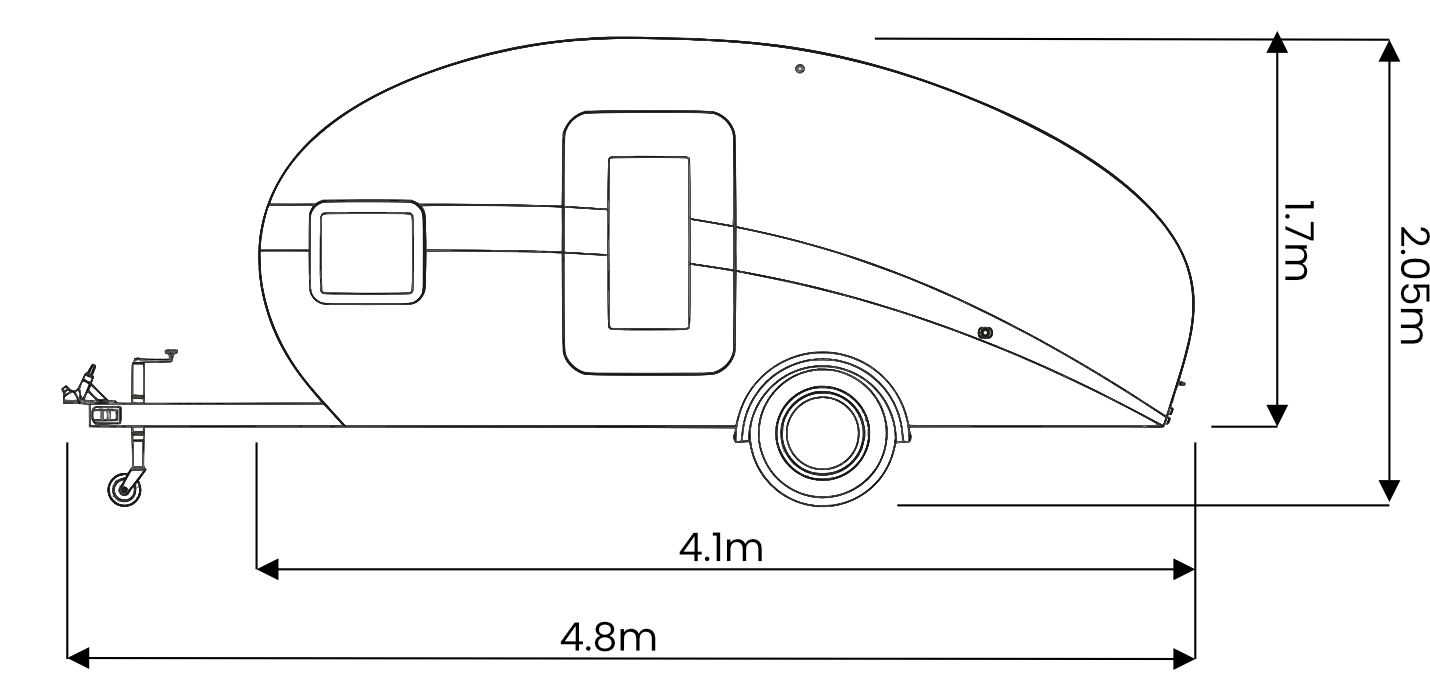
When comparing campers, you will see a few weight terms. These matter because they affect what your car can legally and comfortably tow.
| Term | Meaning | Buyer takeaway |
|---|---|---|
| Tare weight | The camper’s empty weight before luggage, water, food and camping gear. | Useful starting point, but not the final towing weight. |
| ATM | Aggregate Trailer Mass. The maximum loaded trailer weight when not coupled to the vehicle. | This tells you the camper’s maximum allowed loaded weight. |
| GTM | Gross Trailer Mass. The maximum weight carried by the trailer wheels when coupled. | Relevant to braking and legal towing requirements. |
| Payload | The difference between tare weight and maximum loaded weight. | This is your allowance for gear, water and supplies. |
| Tow ball weight | The downward load the camper places on the tow ball. | Must suit your vehicle’s tow ball download limit. |
The JAG Teardrop Camper has an 850 kg tare weight and 1,500 kg ATM capacity, giving it useful payload while still staying in the lightweight camper category.
Tow Ball Weight Matters Too
Tow ball weight is the downward weight the camper places on your vehicle’s tow ball.
This matters because your vehicle has a maximum tow ball download limit. Even if your car has enough braked towing capacity, the tow ball weight still needs to suit the vehicle.
This is especially important for smaller cars, hybrids and EVs. Some vehicles have a respectable braked towing capacity but a more restrictive tow ball limit. That is why you should check both numbers before choosing a camper.
A lighter camper with a sensible tow ball weight can make towing feel less intimidating, especially for people moving away from large caravans or heavy camper trailers.
Do Not Forget Payload
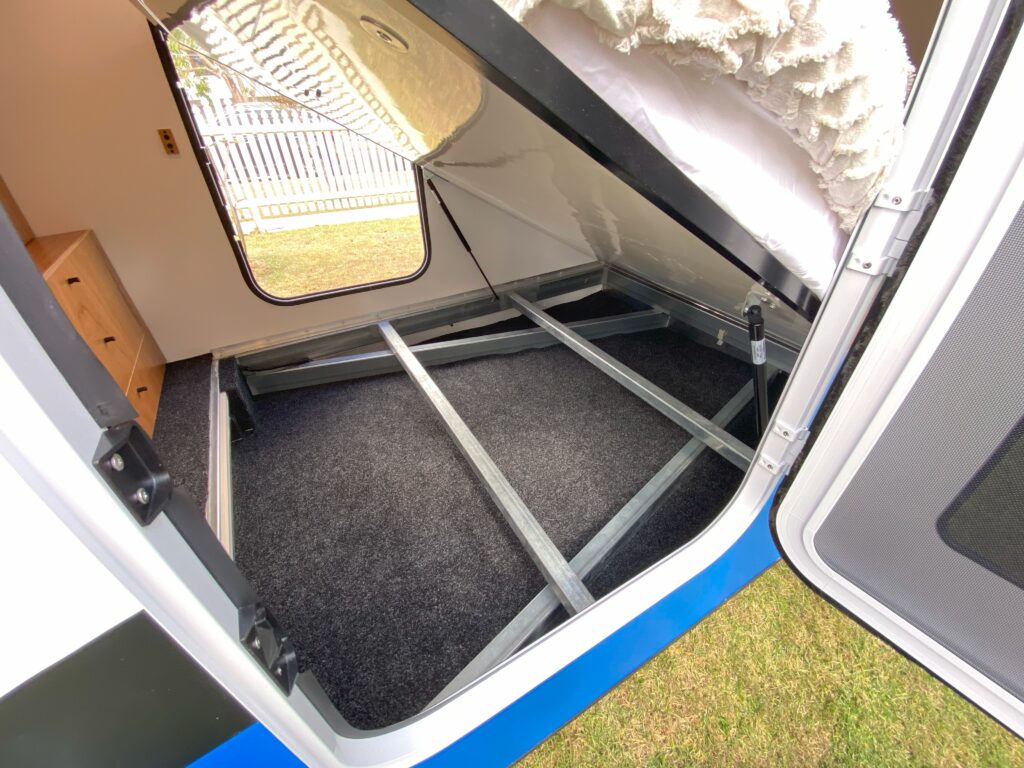
A camper’s empty weight is only the starting point. Before a trip, you might add water, food, clothes, bedding, camp chairs, cooking gear, tools, solar panels and personal items.
| What you add | Why it matters |
|---|---|
| Water and food | Can add meaningful weight quickly, especially for longer trips. |
| Camping gear | Chairs, tables, tools and recovery gear all reduce remaining payload. |
| Electrical extras | Solar panels, batteries and accessories can affect total loaded weight. |
| Vehicle passengers and luggage | Can matter if your vehicle has a Gross Combination Mass limit. |
This is where a lightweight camper design helps. Starting with a lower tare weight gives you more flexibility before you reach the camper’s maximum loaded weight or your vehicle’s towing limits.
It also helps keep the setup practical. A camper that is technically towable but always close to the limit may not feel relaxed on longer trips.
Weight Is Important, But Shape Matters Too
A lot of buyers focus only on weight. Weight matters, but it is not the whole towing story.
A camper also has to move through the air.
A tall, blunt trailer can create more drag than people expect. That can affect fuel use, EV range, towing comfort and how hard the car has to work at highway speed.
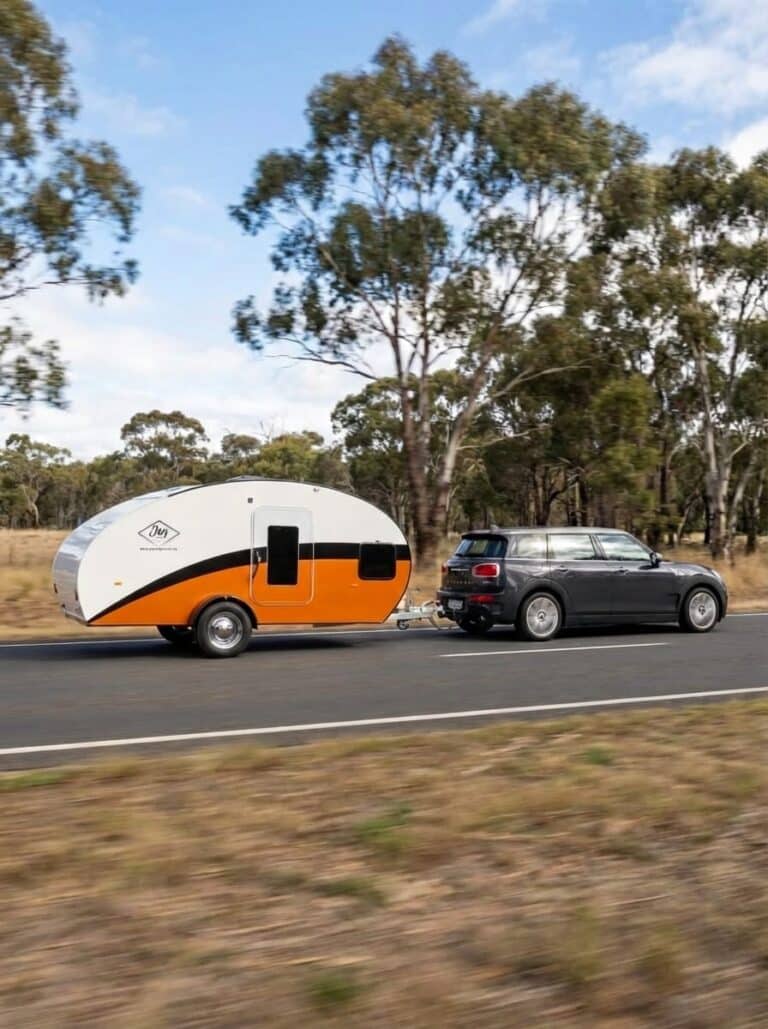
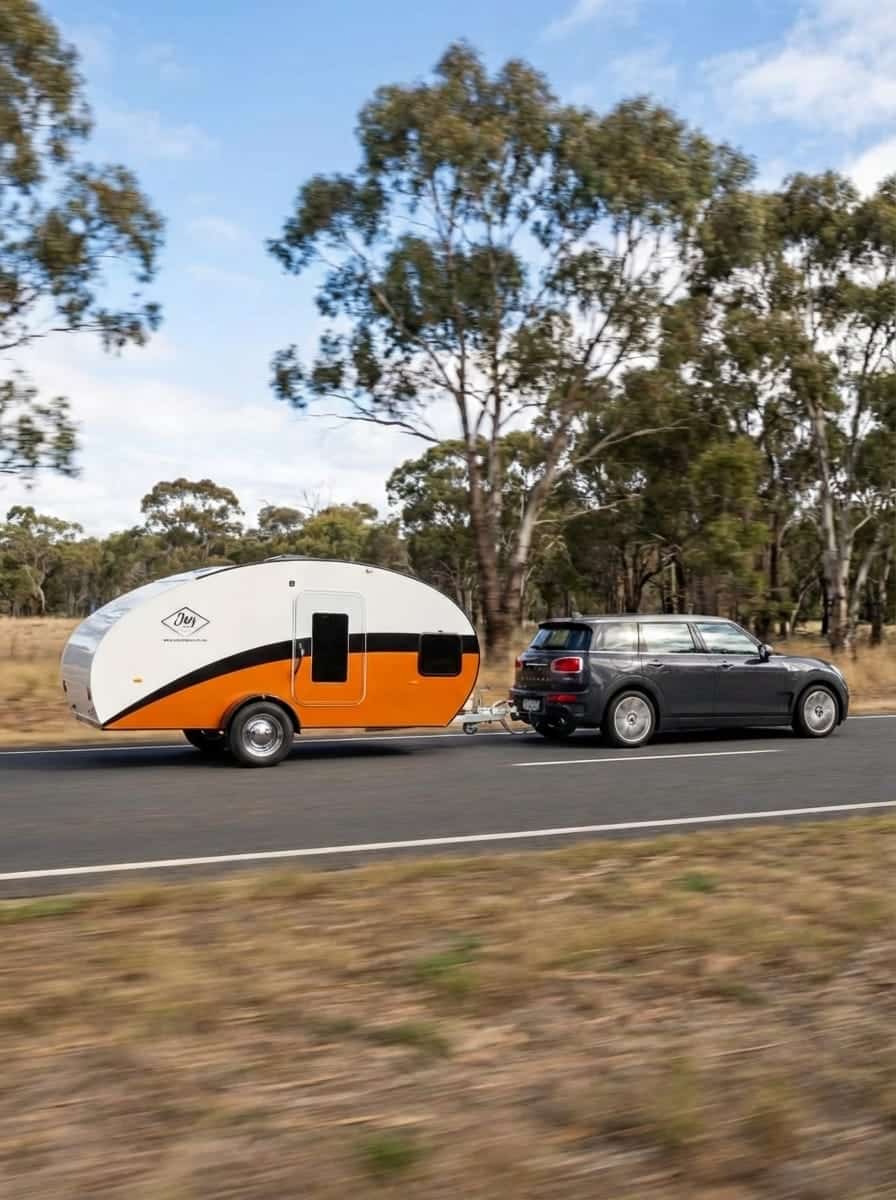
This is where a teardrop camper has a real advantage. The JAG Teardrop Camper uses a compact, aerodynamic shape designed to sit neatly behind the tow vehicle. For small cars, hybrids and EVs, that can make the overall towing experience feel more natural than pulling a larger, boxier caravan.
For more on this angle, read our EV-friendly teardrop camper guide.
Can a Small Car Tow a Teardrop Camper?
Many small cars, compact SUVs, hybrids and EVs can tow a camper, but it depends on the exact vehicle.
| Question to check | Where to find the answer | Why it matters |
|---|---|---|
| What is my braked towing capacity? | Vehicle manual, manufacturer specs or compliance information. | Shows the maximum trailer weight your car is rated to tow with brakes. |
| What is my tow ball limit? | Vehicle manual or towbar documentation. | Prevents overloading the rear of the vehicle. |
| What will the camper weigh loaded? | Camper specs plus your expected water, gear and luggage. | The loaded weight is what matters on the road. |
| Does my setup require brakes? | State towing rules and trailer specifications. | Important for legal compliance and safe stopping. |
| How will I actually travel? | Your trip style, road conditions and packing habits. | A setup near its limit may not feel relaxed on long trips. |
Do not guess this from engine size or vehicle appearance. Some small vehicles are rated better than expected. Some larger vehicles have lower limits than buyers assume.
The right question is not “is my car big enough?” It is “do my vehicle’s rated limits suit this camper when it is loaded for the way I travel?”
Why Teardrop Campers Suit Modern Tow Vehicles
The Australian vehicle market is changing. More people are driving efficient petrol cars, hybrids, EVs and smaller SUVs. Not everyone wants to buy a large diesel 4WD just to go camping.
That shift suits teardrop campers.
A well-designed teardrop camper gives buyers a middle path. It is more comfortable and capable than a basic box trailer setup, but easier to tow, store and live with than a large caravan.
The JAG Teardrop Camper is built around that idea: lightweight towing, aerodynamic shape, proper comfort, a full rear kitchen, queen bed, smart storage, lithium power, solar charging and a compact touring setup in one camper.
If you are comparing camper styles, this teardrop camper vs caravan guide may help.
Quick Checklist Before You Buy
- Check your vehicle’s braked towing capacity.
- Check your maximum tow ball download.
- Check the camper’s tare weight.
- Check the camper’s ATM.
- Estimate your real payload: water, food, clothes, cooking gear and accessories.
- Confirm the braking setup.
- Think about where you will tow: highway, local trips, national parks or rougher roads.
- Decide whether you want something that can be stored at home.
- Consider whether the camper suits future vehicles, including hybrids or EVs.
If you are not sure, ask the camper manufacturer to walk through the numbers with you. A good manufacturer should help you understand whether the camper suits your vehicle, not just tell you it will be fine.
Final Thought
Towing capacity for a teardrop camper is not just one number on a spec sheet. It is the relationship between your vehicle, the camper, the payload, tow ball weight, braking setup and the way you plan to travel.
That is why lightweight, aerodynamic campers make so much sense for modern touring.
The JAG Teardrop Camper is designed for people who want real comfort without stepping into a large caravan. It is compact, aerodynamic, fully featured and built in Brisbane for Australian conditions.
If you want help checking whether your vehicle is suitable, contact the JAG team or book a factory tour.
FAQ
What towing capacity do I need for a teardrop camper?
It depends on the camper’s loaded weight, not just its empty weight. Check your vehicle’s braked towing capacity, tow ball limit and the camper’s ATM before deciding.
Is tare weight the same as towing weight?
No. Tare weight is the camper’s empty weight. Your real towing weight will usually be higher once you add water, food, luggage and camping gear.
Can an EV tow a teardrop camper?
Some EVs can tow a teardrop camper, but you need to check the specific model’s towing capacity, tow ball limit and expected range impact. A lighter, aerodynamic camper is usually a better match than a large caravan.
Is a teardrop camper easier to tow than a caravan?
Usually, yes. A teardrop camper is generally smaller, lighter and more aerodynamic than a full-size caravan, which can make towing and storage easier.
Useful towing references: NSW Government towing guidance and RACV towing capacity guide.