Looking for the best pod campers in Australia? There is no single best choice for every traveller. A 500kg compact camper and a 1,500kg off-road pod caravan may both be marketed as pod campers, but they suit very different tow vehicles, budgets and travel plans.
This comparison looks at the current Australian market by asking a more useful question: which pod camper is the best fit for the way you actually travel?
We build the JAG Glider and JAG Teardrop Camper, so they are included in this guide. We have explained where each JAG model makes sense, along with the compromises. The comparison is based on towing weight, layout, equipment, off-road use, storage and the type of buyer each camper suits.
Best pod campers in Australia: quick answer
- Best for lightweight full off-road touring: JAG Glider
- Best for comfort and storage in a compact camper: JAG Teardrop Camper
- Best for a very light entry point: Space Pod Seeker ST Lite
- Best for a small all-terrain pod: Space Pod Seeker AT Gen 2
- Best for mainstream dealer support: Jayco J-Pod XL
- Best for a small caravan-style layout: Snowy River SRS-9
- Best for increased off-grid capacity: Goldfields Escape or Nomad
The right choice still depends on your vehicle’s approved braked towing capacity and tow-ball limit. Check those numbers before comparing beds, kitchens or colours.
Short version: choose the JAG Glider for a light, full off-road couple’s camper; choose the JAG Teardrop Camper when comfort, storage and kitchen space matter more; and compare the alternatives below against your vehicle’s real towing limits.
| Camper | Best suited to | Weight direction | Origin |
|---|---|---|---|
| JAG Glider | Lightweight full off-road touring | Ultra-light | Australian-made, built in Brisbane |
| JAG Teardrop Camper | More comfort, storage and kitchen space | Light to mid-weight | Australian-made, built in Brisbane |
| Space Pod Seekers | Lightweight or compact all-terrain touring | Ultra-light | Australian-made |
| Jayco J-Pod XL | Mainstream dealer and service support | Light | Australian-made |
| Snowy River SRS-9 | Small caravan-style layout | Heavy for its size | Imported from China |
| Goldfields Escape and Nomad | Longer off-grid and remote touring | Heavy off-road | Imported from China |
Where are these pod campers made? Australian-made vs imported
Origin matters because it affects how buyers think about local manufacturing, parts, warranty support and accountability. The current comparison is not a list of identical products from identical supply chains:
- JAG Glider and JAG Teardrop Camper: built in Brisbane, Australia.
- Space Pod Seeker ST Lite and AT Gen 2: Australian-made.
- Jayco J-Pod XL: Australian-made.
- Snowy River SRS-9: imported from China and sold through the Snowy River dealer network.
- Goldfields Escape and Nomad: imported from China and sold and supported by Goldfields Campers in Victoria.
Always confirm the current build origin, warranty provider and parts arrangements for the exact model and year you are buying. “Australian brand”, “Australian-owned” and “Australian-made” are not interchangeable descriptions.
What is a pod camper?

Pod camper is a loose market term rather than a single technical category. It usually describes a compact, hard-sided camper with a sleeping cabin, simple kitchen and relatively small footprint. Some are close to traditional teardrops. Others are compact off-road caravans with large batteries, substantial water capacity and a tare weight well above 1,000kg.
That difference matters. A buyer looking for a camper that can be towed by a small car should not compare only the number of beds or the size of the fridge. Tare weight, tow-ball weight, ATM, payload and the actual tow vehicle limits come first.
How we compared these campers
The comparison considers:
- tare weight, ATM, payload and tow-ball weight
- bed size and internal comfort
- kitchen and storage layout
- water, battery and solar equipment
- suspension, braking and off-road positioning
- garage storage and day-to-day handling
- country of manufacture and warranty information
- the buyer each camper is most likely to suit
Specifications and prices can change between model years and individual builds. Confirm the final build sheet and tow requirements with the manufacturer before ordering.
1. JAG Glider: best for lightweight full off-road touring
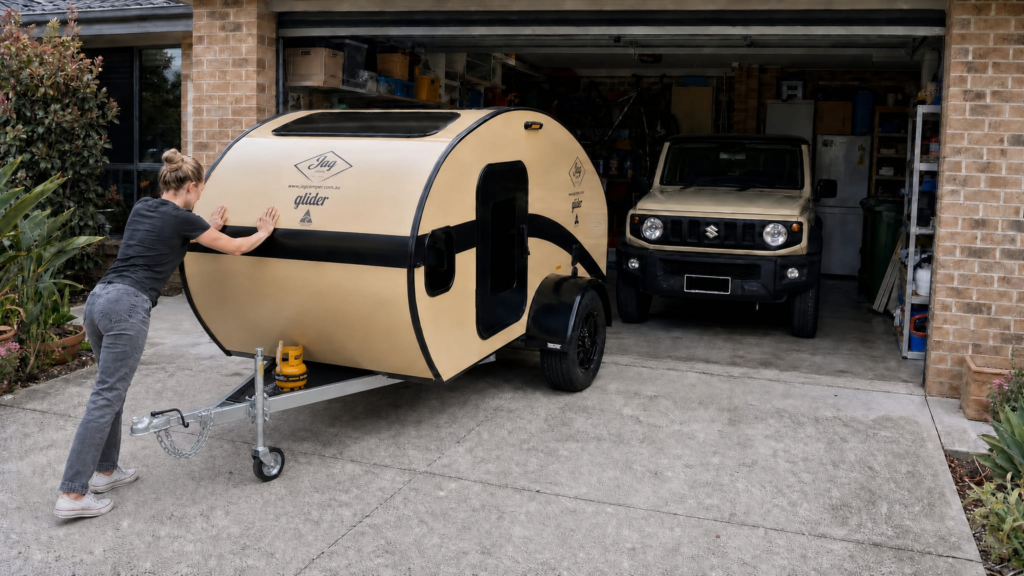
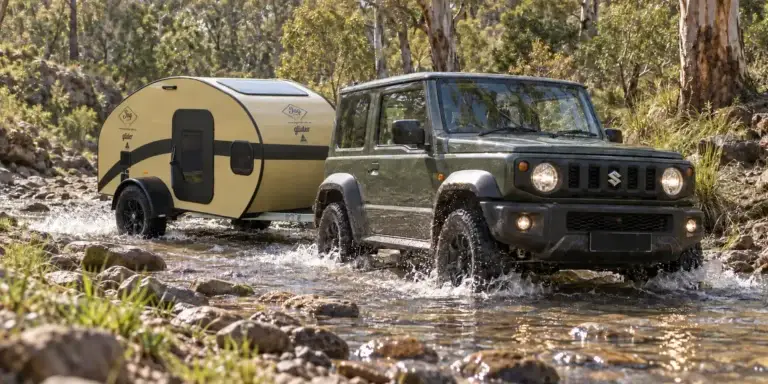
The JAG Glider is the lightest camper in the JAG range. It is aimed at buyers who want a proper hard-sided camper and off-road capability without moving into the weight and size of a conventional caravan.
The current reference specification lists a 550kg tare, 50kg tow-ball weight and 1,020kg ATM. It sleeps two on a double memory-foam mattress and has a rear kitchen with a 30L drawer fridge/freezer, two-burner cooktop, drawers, bench space and running water. The cabin is insulated and includes an openable sunroof, storage and security doors.
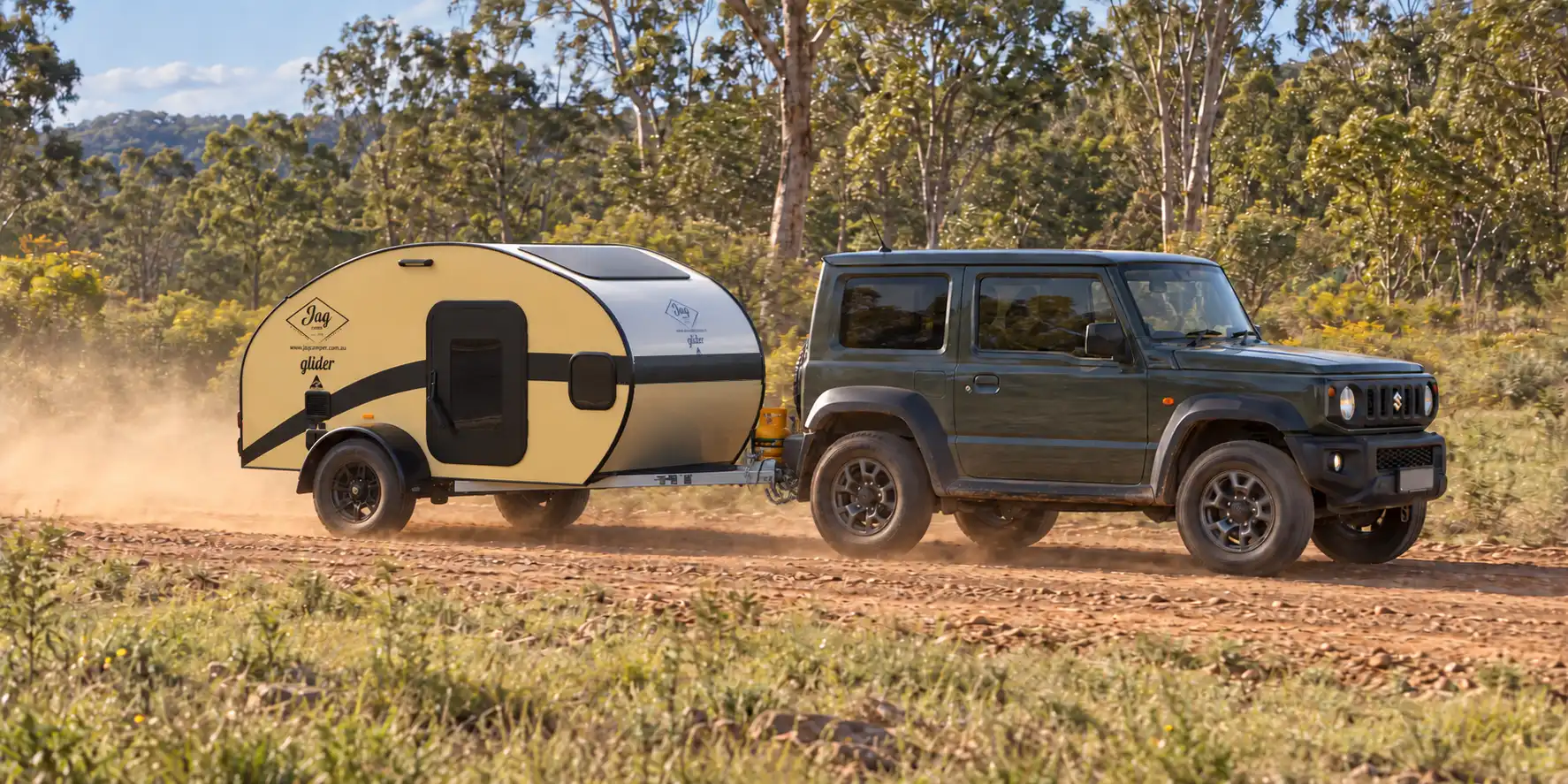
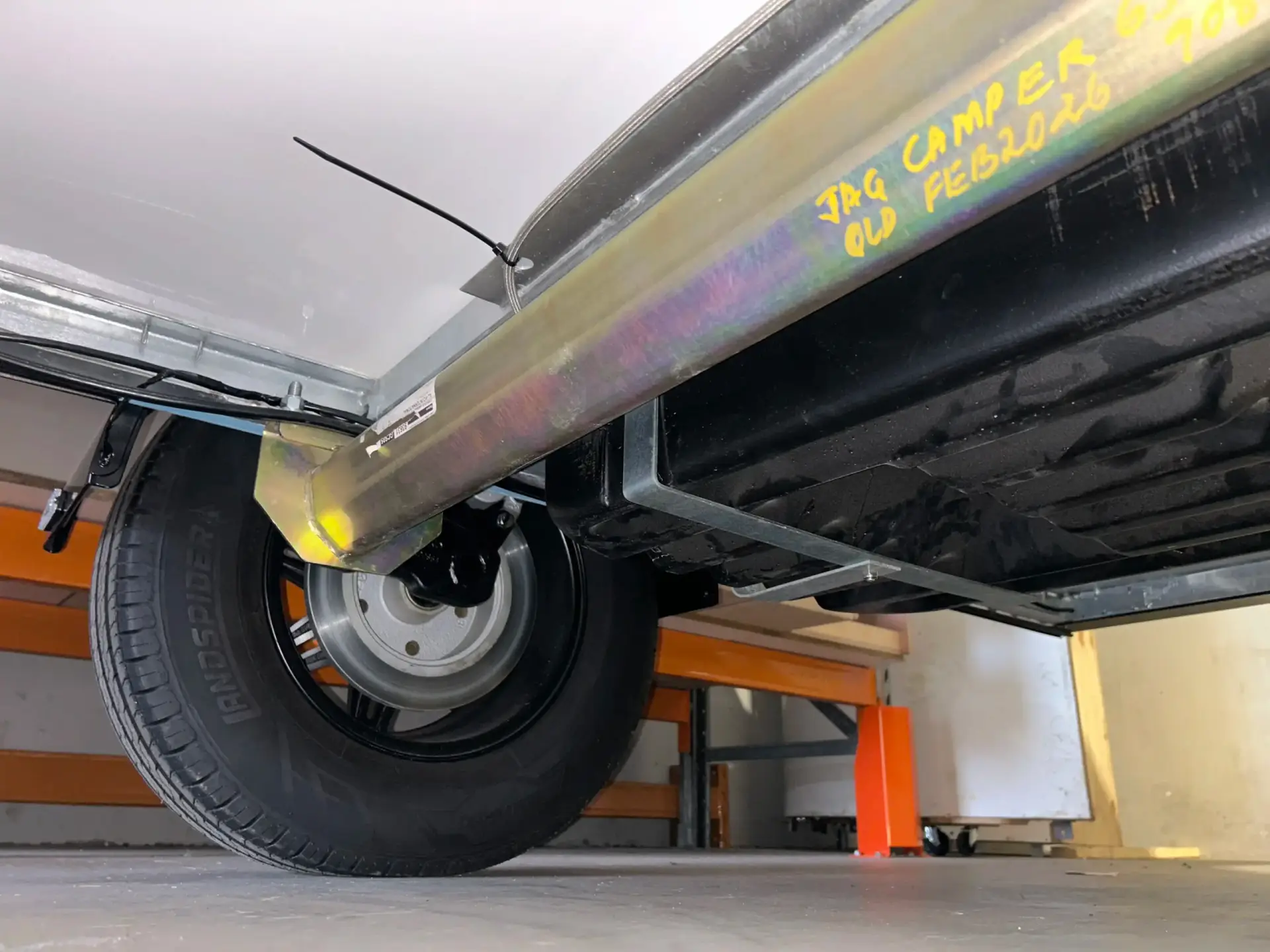
The Glider’s full off-road positioning comes from its AL-KO IRS independent off-road suspension, articulating hitch, hydraulic override braking, composite construction and galvanised steel chassis. It is built in Brisbane and carries a five-year structural warranty.
Why choose it
- Very low tare and tow-ball weight
- Full off-road design rather than light touring only
- Compact storage footprint and simple setup
- Good fit for solo travellers, couples, small cars and many EV or hybrid owners, subject to vehicle limits
- Proper enclosed sleeping cabin and rear kitchen rather than a bare trailer
The compromise
The Glider is compact. It sleeps two, the cabin is not designed as a standing living room, and its storage is more limited than a larger pod caravan. Buyers who carry a lot of equipment or spend long periods inside may prefer the roomier JAG Teardrop Camper or a heavier off-road model.
2. JAG Teardrop Camper: best for comfort and storage
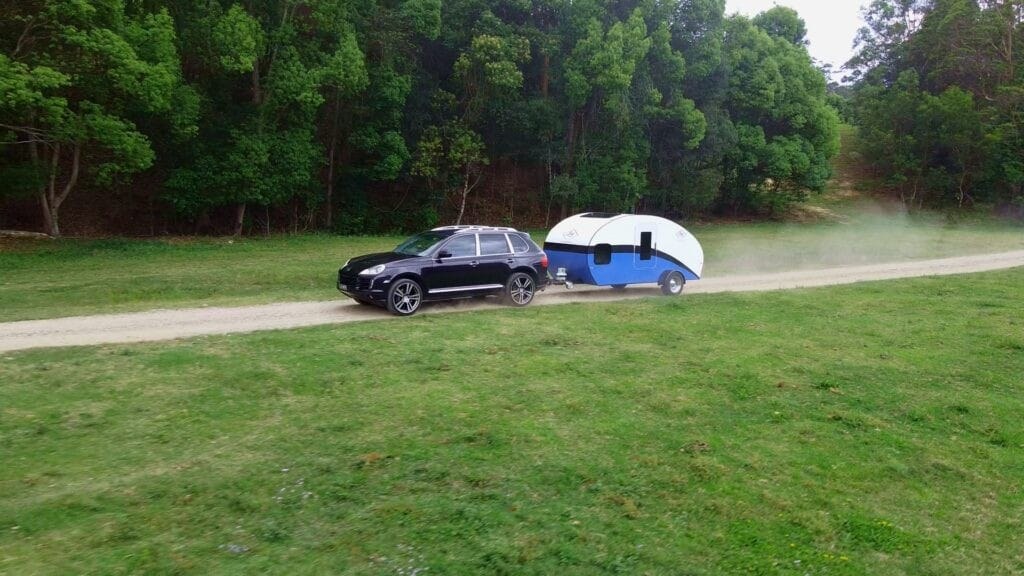
The JAG Teardrop Camper is the better fit for buyers who want a more comfortable couple’s camper while staying well below the size of a traditional caravan.

It has an 850kg tare, 80kg tow-ball weight and 1,500kg ATM. The cabin includes a queen memory-foam mattress, skylight, insulation, windows, storage and a rotating smart TV. Its larger rear kitchen includes a 60L upright fridge, gas cooking, running water, a 1,600mm bench and more storage than the Glider.
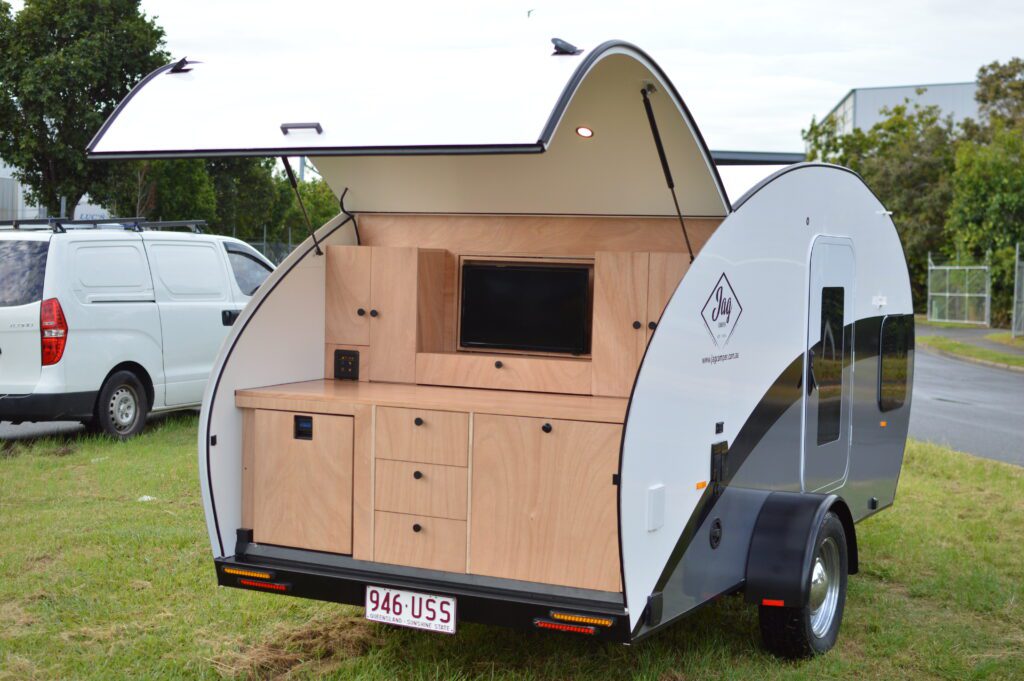
The Teardrop is a semi off-road camper for corrugated dirt roads, national parks and beaches. It uses Cruisemaster CRS2 suspension and a 3mm checkerplate aluminium underbody. It is not intended for highly technical tracks, which is an important distinction from the Glider.
Why choose it
- More cabin space and a queen bed
- More storage and a larger kitchen
- Better suited to couples and longer touring
- Still compact enough for many driveways and garages
- Australian-made construction and a five-year structural warranty
The compromise
The extra comfort comes with extra weight. The Teardrop needs a tow vehicle with more capacity than the Glider and is a semi off-road model rather than a full off-road camper. It is the better choice for comfort, not for the lightest towing setup.
3. Space Pod Seeker ST Lite: best for a very light entry point

The Space Pod Seeker ST Lite is aimed at buyers who want a compact, simple pod camper at the lighter end of the market. Current published third-party model data lists a tare of about 480kg and a 750kg ATM, but buyers should confirm the current manufacturer specification and final build.
Its appeal is straightforward: compact dimensions, a double sleeping area and a low-weight format that can suit smaller tow vehicles. The trade-off is that entry-level equipment and payload are more limited than on larger or more fully equipped models.
Space Pod also offers the ST, LX and AT variants. The AT is the more relevant comparison for buyers who want all-terrain equipment, while the ST Lite is the simpler lightweight option.
Best for
Buyers who want a small Australian-made pod camper and are prepared to keep their equipment list, water capacity and touring expectations realistic.
4. Space Pod Seeker AT Gen 2: best for a small all-terrain pod

The Space Pod Seeker AT Gen 2 moves the range towards all-terrain use. Published model information lists an approximately 600kg tare, 1,100kg ATM, off-road suspension, all-terrain tyres and an off-road coupling.
It is a useful comparison with the JAG Glider because both target buyers who want compact towing and more capability than a basic on-road camper. The Glider has a higher published ATM and a different layout, including a rear kitchen, 68L water tank and full off-road positioning. The Seeker AT may suit buyers who prefer the Space Pod layout or a lower entry price.
Best for
Buyers who want a compact all-terrain pod but do not need the Glider’s particular kitchen, electrical system or customisation approach.
5. Jayco J-Pod XL: best for mainstream dealer support
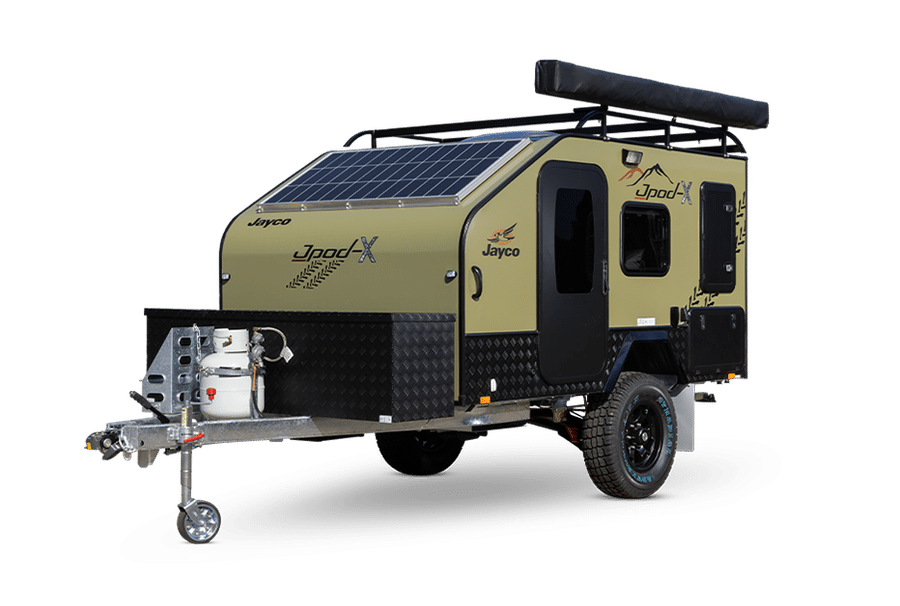
The Jayco J-Pod XL is a compact camper for buyers who value a large established dealer and service network. The XL builds on the standard J-Pod format with more space and comfort for couples who want something small but less stripped back than a basic camper trailer.
The main reason to consider it is not simply a specification number. Jayco’s dealer network, parts access and familiarity with the brand can matter to a first-time buyer who wants support close to home.
The compromise
The J-Pod XL should be compared with the actual current build, not just the model name. Check the tare, ATM, tow-ball weight, suspension specification, water capacity and what is included as standard. It may suit light touring better than buyers looking for full off-road capability.
6. Snowy River SRS-9: best for a small caravan-style layout
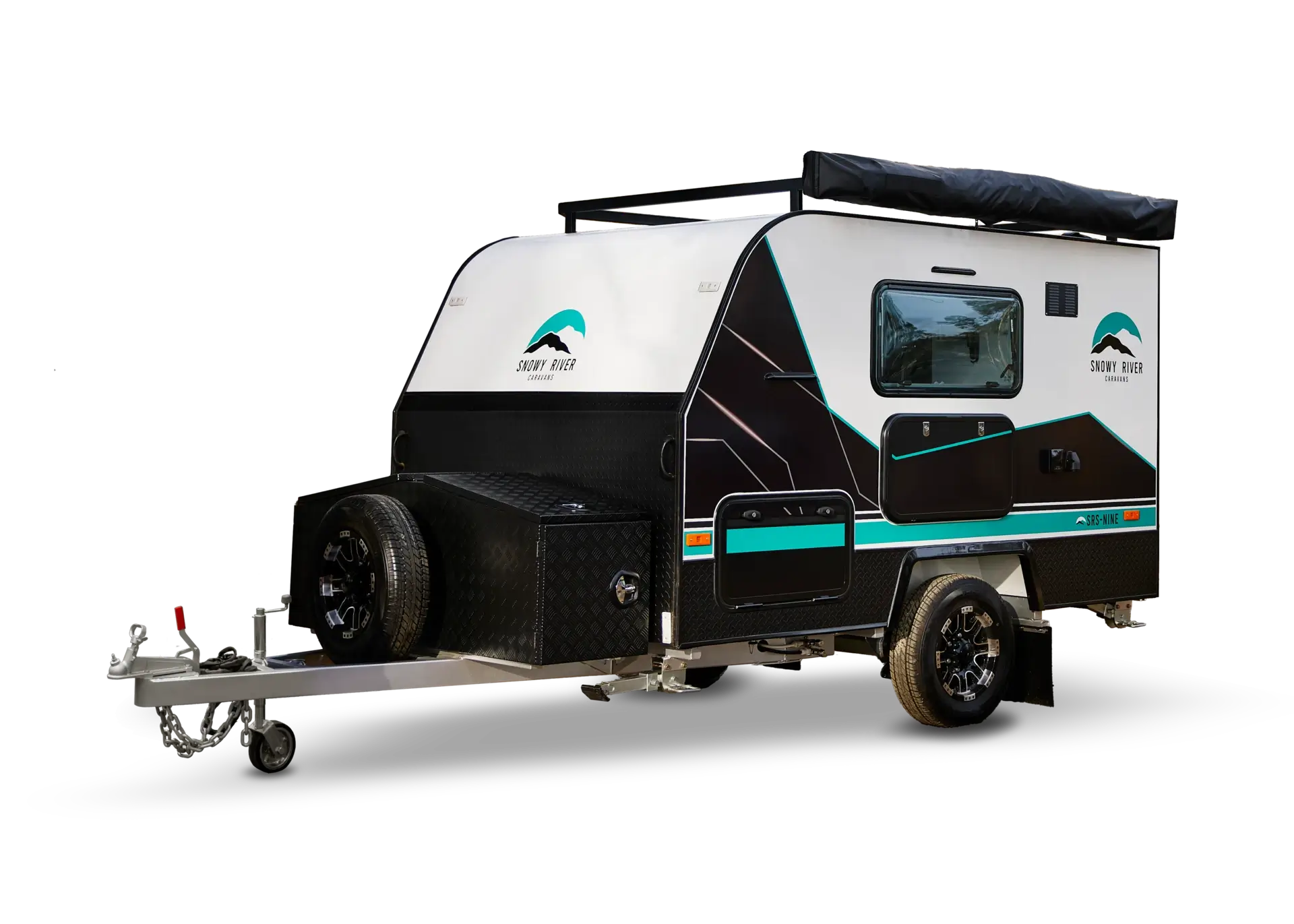
The Snowy River SRS-9 is a useful comparison because it sits closer to a small caravan than a traditional pod camper. The model was released as a compact nine-foot caravan-style camper aimed at buyers who want more conventional caravan features in a small package.
That can mean a different internal experience from a teardrop or pod. Buyers should compare the sleeping layout, kitchen, internal storage, bathroom or ensuite arrangements, water and power systems, tare and ATM carefully. The extra caravan-style equipment may improve comfort, but it usually moves the camper away from the ultra-light end of the market.
Best for
Buyers who like the compact size of a pod but want a more familiar caravan-style layout and are willing to tow more weight.
7. Goldfields Escape and Nomad: best for serious off-grid touring
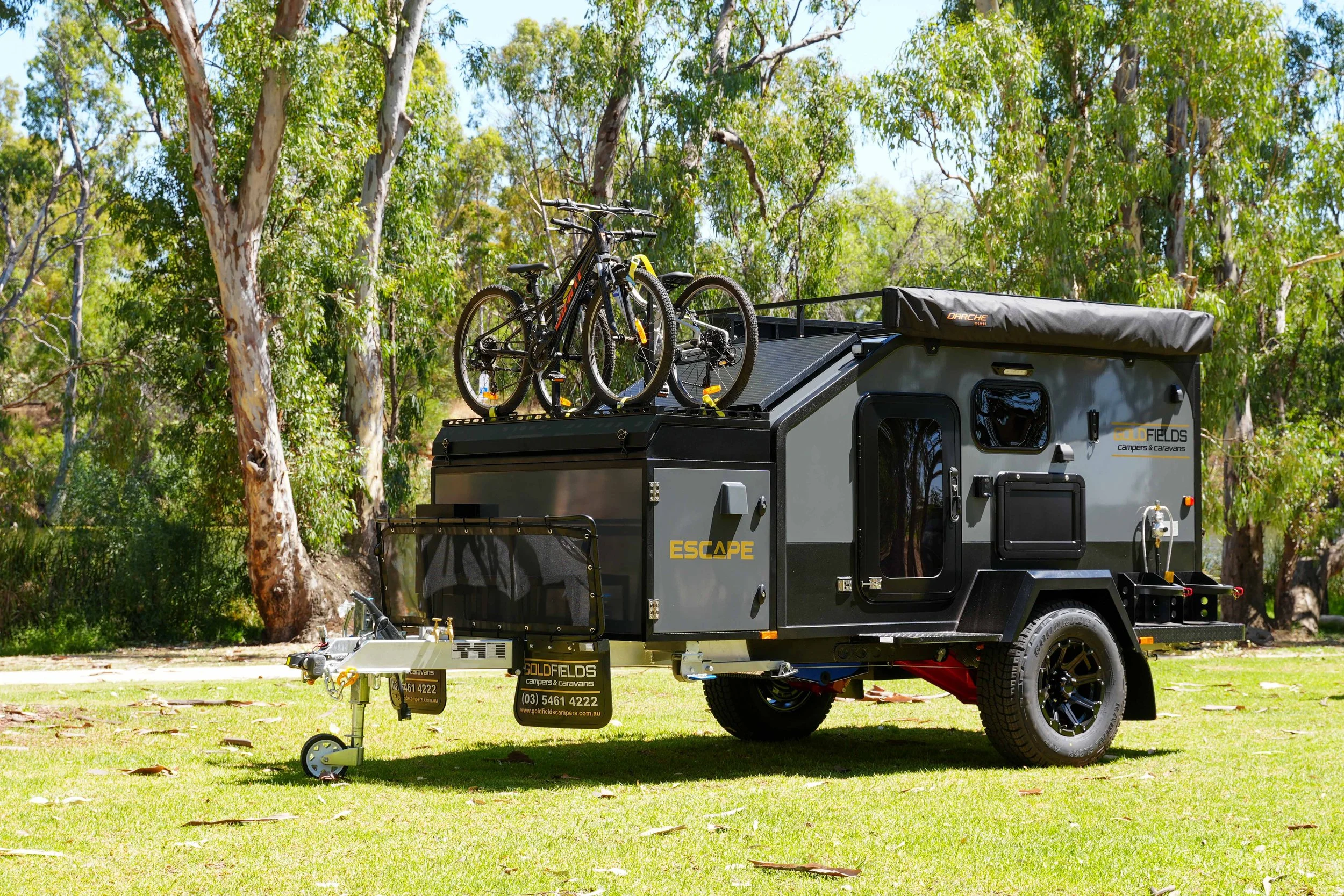
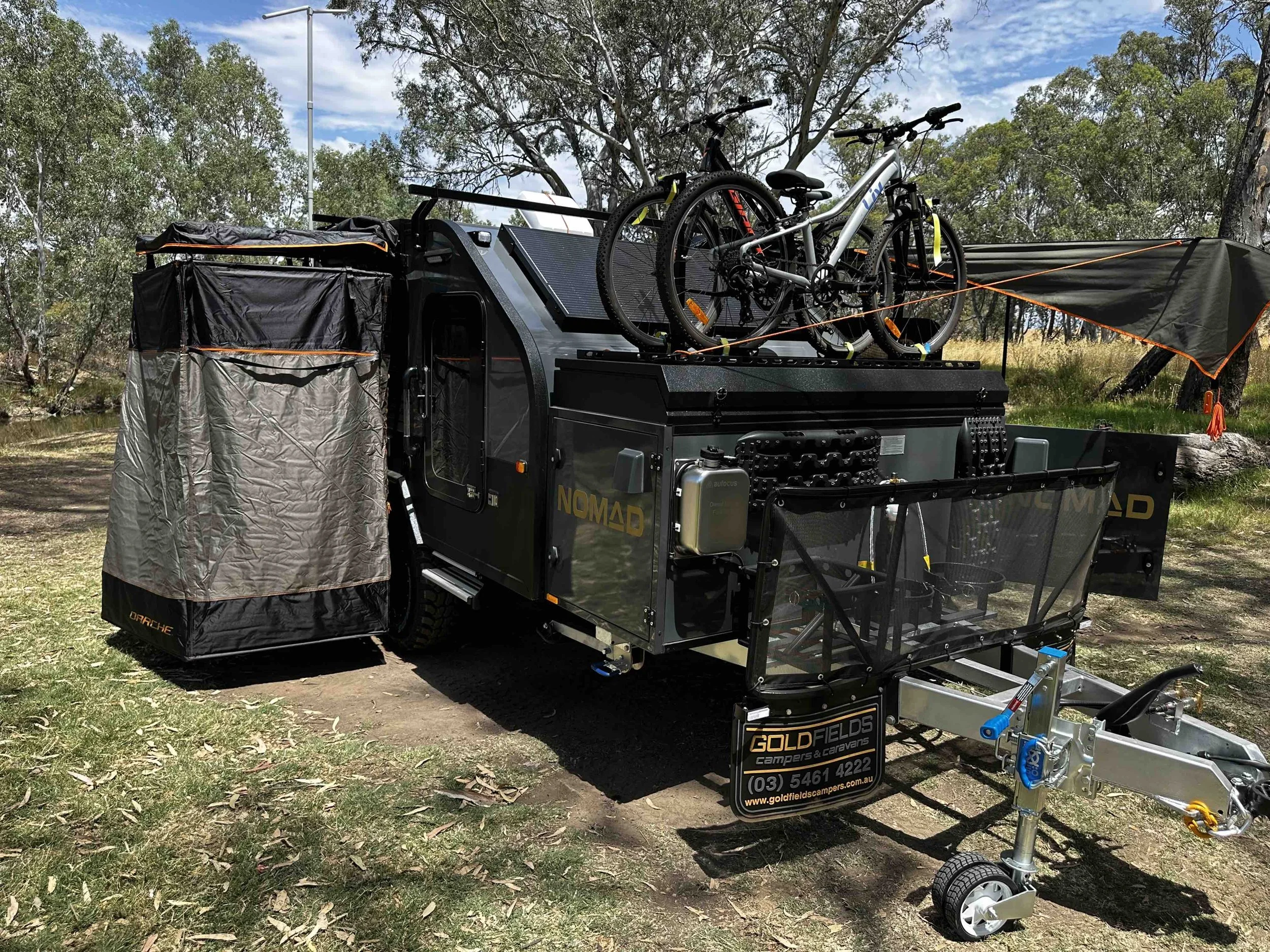
The Goldfields Escape and Nomad show how broad the pod-camper category has become. These are compact off-road campers, but they are not lightweight alternatives for small cars.
Published model information lists the Escape at about 1,330kg tare and the Nomad at about 1,500kg tare. The Nomad is built around a larger off-grid system, with published information referring to 600Ah of lithium capacity, 200W of roof solar and substantial water and storage options. The Escape is positioned as the lighter of the two, with a strong off-grid specification and more modest weight.
Best for
Travellers who want longer stays away from powered sites, more storage and a heavier-duty off-road setup.
The compromise
These campers need a substantially more capable tow vehicle than the JAG Glider, Space Pod or other ultra-light options. They may be excellent choices for remote touring, but they are not direct alternatives if keeping towing weight below 1,000kg is the priority.
Why tare weight matters more than the word pod
The word pod tells you very little about whether a camper suits your car. Start with the numbers:
- Tare: the camper’s approximate empty weight. The delivered camper may weigh more once personal equipment, water and optional accessories are added.
- ATM: the maximum permitted loaded mass of the camper.
- Payload: the difference between tare and ATM, although actual usable payload can be affected by fitted options and ball loading.
- Tow-ball weight: the downward load placed on the tow vehicle. Check it against the vehicle’s tow-ball limit.
A camper’s published tare is not a licence to tow it with any small car. Compare the camper’s loaded mass and ball weight with the tow vehicle’s official limits, and allow for passengers, luggage and other accessories in the vehicle.
Which pod camper suits your travel style?
- Choose the JAG Glider if low weight, compact storage and full off-road capability are the priorities.
- Choose the JAG Teardrop Camper if you want a queen bed, more storage and a roomier couple’s setup.
- Choose the Space Pod Seeker ST Lite if you want a very light and simple entry-level pod.
- Choose the Space Pod Seeker AT if you want a small all-terrain pod and prefer its layout or price.
- Choose the Jayco J-Pod XL if dealer and service network access is a major part of your decision.
- Choose the Snowy River SRS-9 if you want a small caravan-style interior and can tow more weight.
- Choose the Goldfields Escape or Nomad if remote off-grid capability matters more than low towing weight.
Questions to ask before buying a pod camper
- What is the camper’s current tare, ATM and tow-ball weight?
- What will the camper weigh with the options I want?
- Does my vehicle meet both the braked towing and tow-ball limits?
- Is the camper on-road, semi off-road or full off-road?
- How much water, battery capacity and payload will I have in real use?
- Can I store it at home, and can I move it without the vehicle?
- What is included in the advertised price?
- Where will warranty work and servicing be handled?
- What happens to the payload when I add an awning, storage box, spare wheel or extra battery?
Best pod campers in Australia: frequently asked questions
What is the best pod camper for a small tow vehicle?
Start with the camper’s loaded weight and tow-ball weight, not its advertised category. The JAG Glider and other lightweight options are the logical place to start, but the final choice depends on the vehicle’s official towing limits.
Are pod campers suitable for off-road travel?
Some are designed for full off-road travel, while others are intended for sealed roads or mild gravel. Check the suspension, chassis, coupling, tyres, ground clearance and manufacturer’s stated use before buying.
Is a heavier pod camper always better?
No. A heavier camper can provide more space, water, battery capacity and storage, but it also needs a more capable tow vehicle. The best pod camper is the one whose loaded weight and features match your actual travel plans.
Final verdict
The best pod camper depends on what you are trying to keep small: towing weight, storage space, price, setup time or the size of the vehicle you need to take camping.
The JAG Glider is the strongest fit for buyers who want the lightest full off-road setup with a proper enclosed cabin and rear kitchen. The JAG Teardrop Camper is the better fit for couples who want more room, a queen bed and more storage while staying in a compact format.
Neither is the right answer for every buyer. That is the point of comparing the category properly. Start with your vehicle limits, decide how much comfort and off-road ability you need, then compare the campers that actually fit those requirements.
If you are comparing the two JAG models, you can build your JAG Camper online or contact the Brisbane team to talk through your vehicle and travel plans.

