
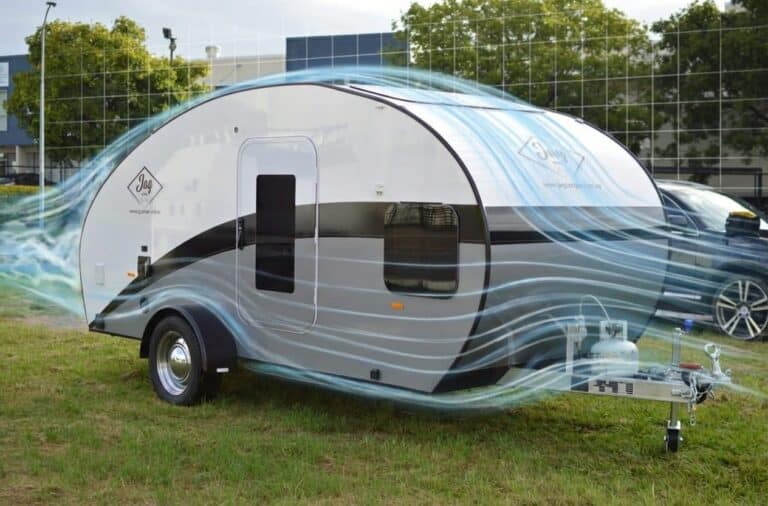
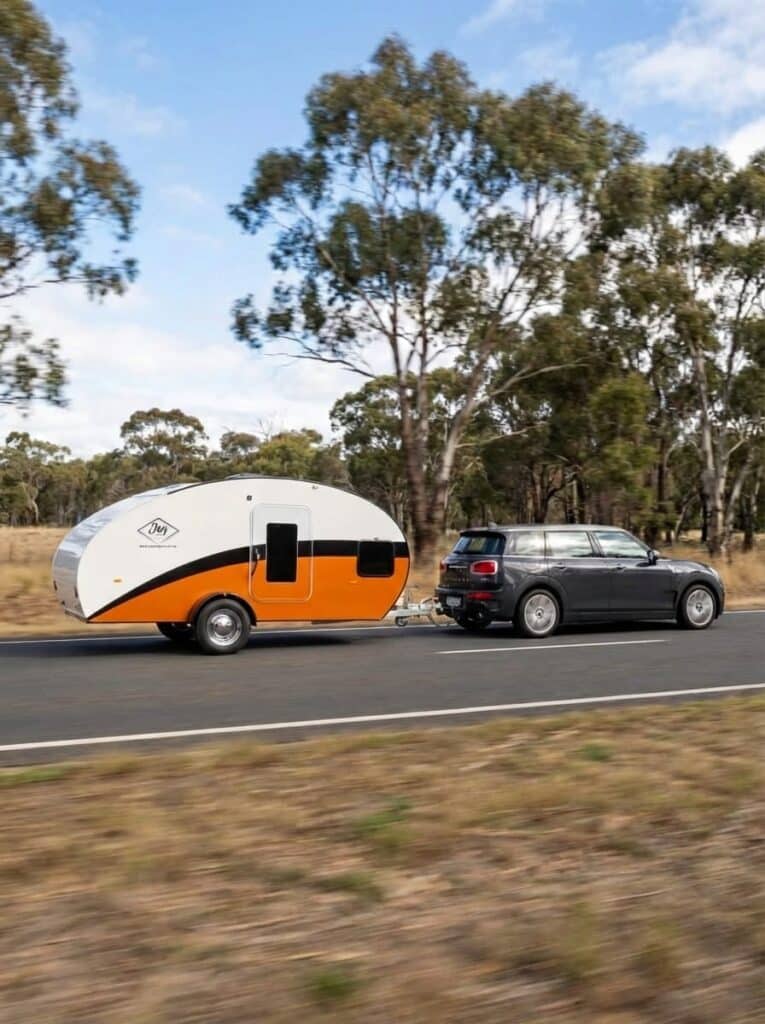
Most people shopping for a camper focus on floorplans, features and price. But there’s a hidden factor that has a huge impact on how your holidays actually feel: aerodynamics.
Tow something big and boxy and you’re dragging a wall of air behind your car. Tow an aerodynamic teardrop camper, and suddenly the drive is calmer, easier and cheaper. For a lot of JAG owners, the feedback is the same: ‘I hardly notice it behind the car – even the fuel consumption barely changes.’
In this post we’ll break down what’s going on in the air behind your bumper, why teardrop shapes matter so much for small cars and EVs, and how JAG’s designs are built around one goal: Explore More, Tow Less.
Drag, Wind and Fuel: What’s Happening Behind Your Tow Vehicle
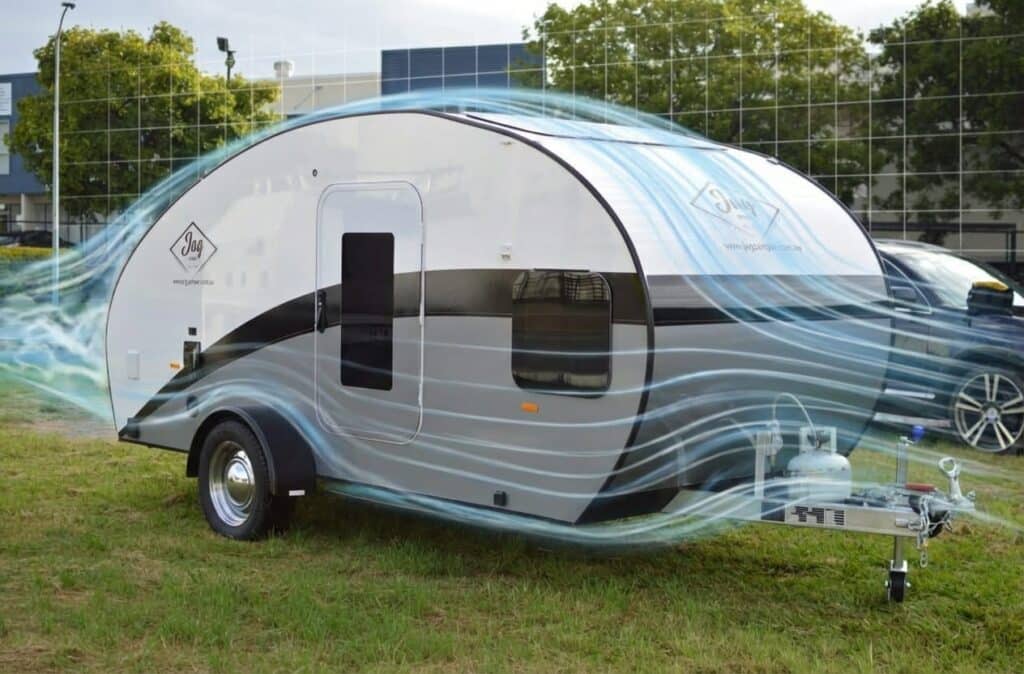
When you’re driving at highway speeds, air behaves more like a fluid than ‘nothing’. Your car has been shaped to slip through that air. Add a caravan, and you’ve just changed the equation.
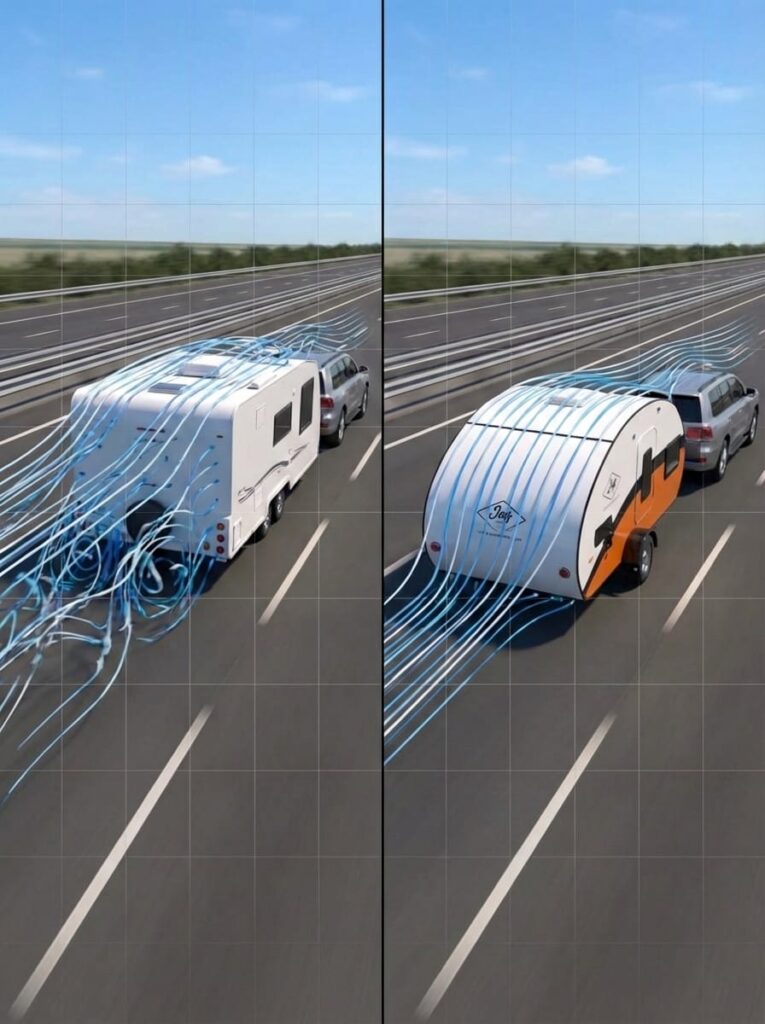
With a boxy caravan:
- The flat front hits the wind like a brick wall.
- Air piles up in front and gets turbulent behind.
- Your engine (or motor) has to work harder just to push everything forward.
That extra work shows up as:
- Higher fuel consumption (or reduced EV range).
- More sway and buffeting in crosswinds or when trucks pass.
- Driver fatigue – you’re constantly correcting the wheel and watching the gauge.
With an aerodynamic teardrop camper, the shape does you a favour:
- The rounded front and tapered roof guide air over and around the camper.
- There’s less turbulent wake behind, so less drag.
- The whole combination feels more like an extension of the car than a sail.
You might not see the physics, but you feel it in your right foot and your shoulders after a long day on the highway.
If you want to go deeper into drag and fuel use, NRMA has a good primer on how roof racks, trailers and vans affect efficiency: NRMA – How Towing Affects Fuel Economy.
How Teardrop Shapes Reduce Drag and Sway
The core idea behind a teardrop camper is simple: smooth the airflow.
Instead of a tall, square box, a teardrop uses:
- A rounded leading edge so air isn’t hitting a sharp corner.
- A curved roofline that gently tapers towards the rear.
- A low overall height, staying tucked in behind the car.
All of this reduces the pressure difference between the front and rear of the camper – which is what we experience as drag.
For you, that means:
- Less wind noise and buffeting, especially on exposed highways.
- Reduced sway when trucks pass or crosswinds pick up.
- A rig that feels planted and predictable, rather than constantly being pushed around.
JAG’s range is built around this idea. Both the flagship JAG Teardrop Camper and the ultra-light JAG Glider use streamlined shapes to cut through the air, not fight it.
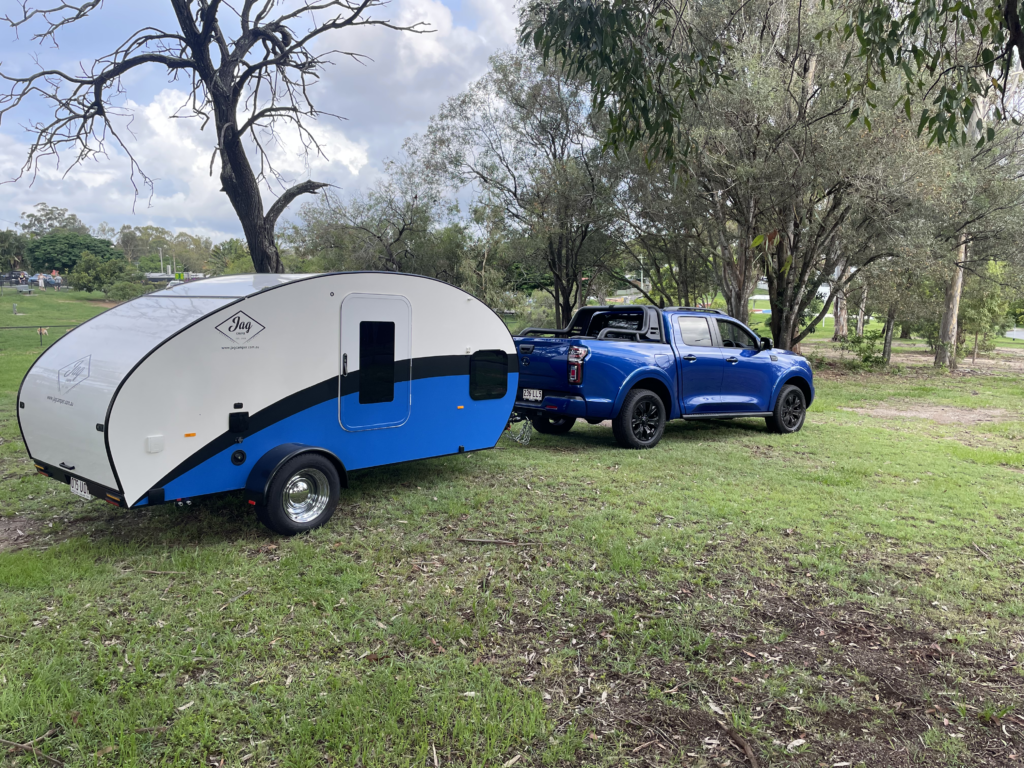
Real-World Benefits: Fuel, Range and Driver Fatigue
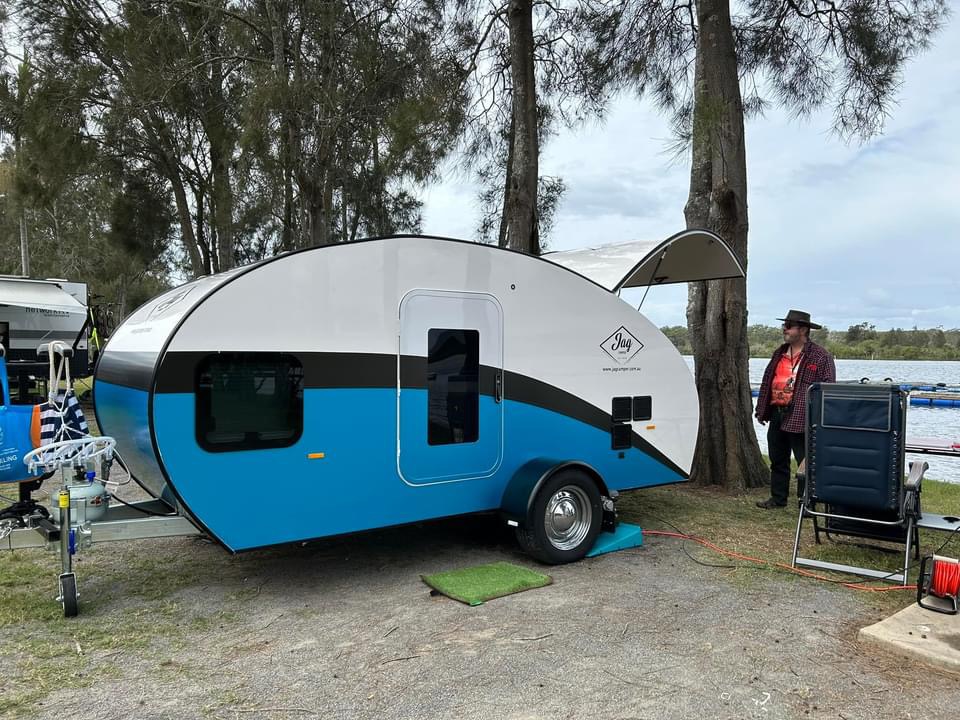
Aerodynamics isn’t just a design buzzword. On the road, an aerodynamic teardrop camper delivers a few real, measurable benefits:
- Fuel consumption that barely moves
Many JAG owners report that when they swap from a boxy camper or trailer to a JAG, they hardly notice a difference in fuel use. There’s still extra weight to tow, but you’re not dragging a giant flat wall. - Better range for EVs and small cars
If you’re towing with a smaller SUV, a hatch, or even an EV, every bit of efficiency counts. A low, aerodynamic camper lets your car’s existing aero do its job. That means more kilometres between fuel stops or charges and less range anxiety when you’re exploring out of town. - Less tiring to drive
A smoother, quieter rig doesn’t just save dollars – it saves your energy. You’re not fighting the wheel all day or flinching every time a truck passes.
For a more technical look at how trailer shape affects economy, RACQ’s towing guides are worth a read – but you don’t need a physics degree to notice the difference once you’re on the road.
Why Aerodynamics Matter Even More for EVs and Small Cars
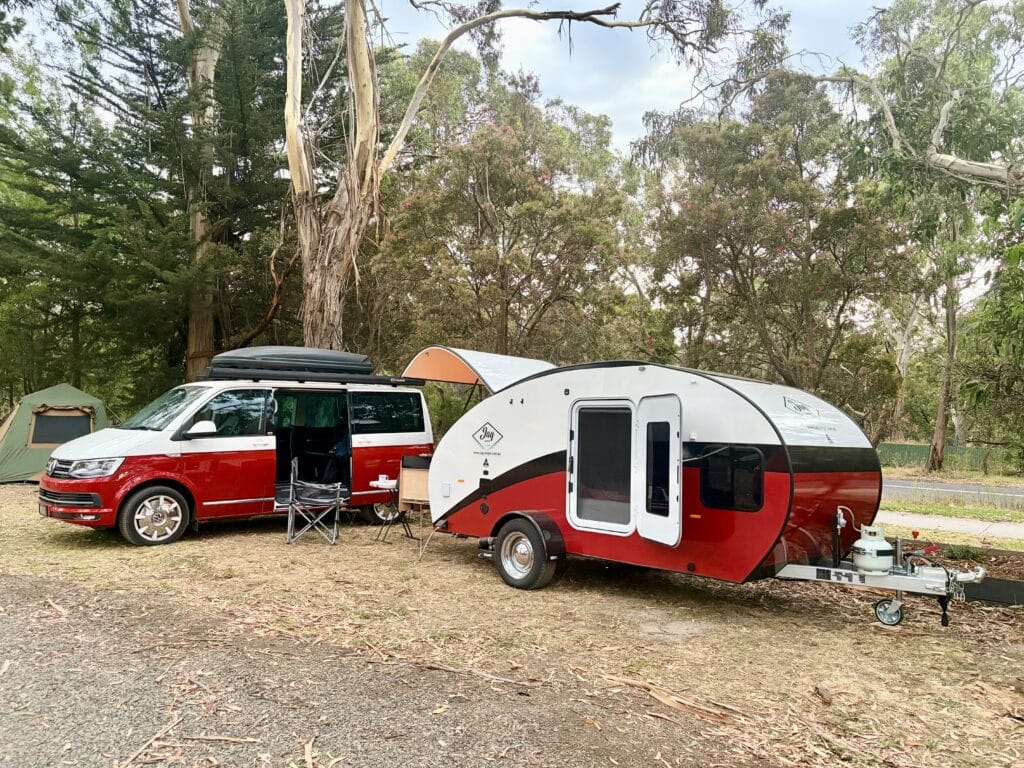
Small tow vehicles and EVs are where aerodynamics really shine.
With a traditional big caravan:
- Many small cars simply can’t tow it legally due to tow limits.
- Even if they can, the flat wall of the van plays havoc with range (EVs) and with gear hunting/engine strain (ICE vehicles).
With a lightweight, aerodynamic teardrop like the JAG Glider or JAG Teardrop Camper:
- The low profile stays neatly in the car’s slipstream.
- The reduced frontal area means less extra drag.
- The light weight respects tow limits and keeps things stable.
For a couple or solo traveller in a small SUV, hatch or EV, that combination makes it realistic to hitch up on a Friday, drive a few hours, and still have range left to explore once you arrive. That’s the whole point of Explore More, Tow Less – not just a slogan, but a design target.
How JAG Designs for “Explore More, Tow Less”
[INSERT IMAGE: Workshop shot – camper mid-build, highlighting the curved profile]
Because JAG designs and builds in-house, aerodynamics isn’t an afterthought – it’s baked into the shell, chassis and layout decisions:
- Curved rooflines and tapered rears reduce drag.
- Compact height and footprint help the camper sit comfortably behind the tow vehicle.
- Weight-conscious construction means you’re not hauling unnecessary kilos.
- Smart storage and galley layout give you comfort and usability without turning the camper into a big box.
The result is a rig that’s easier on fuel and range, kinder to small cars and EVs, and more relaxing to tow for hours on end.
Where to From Here?
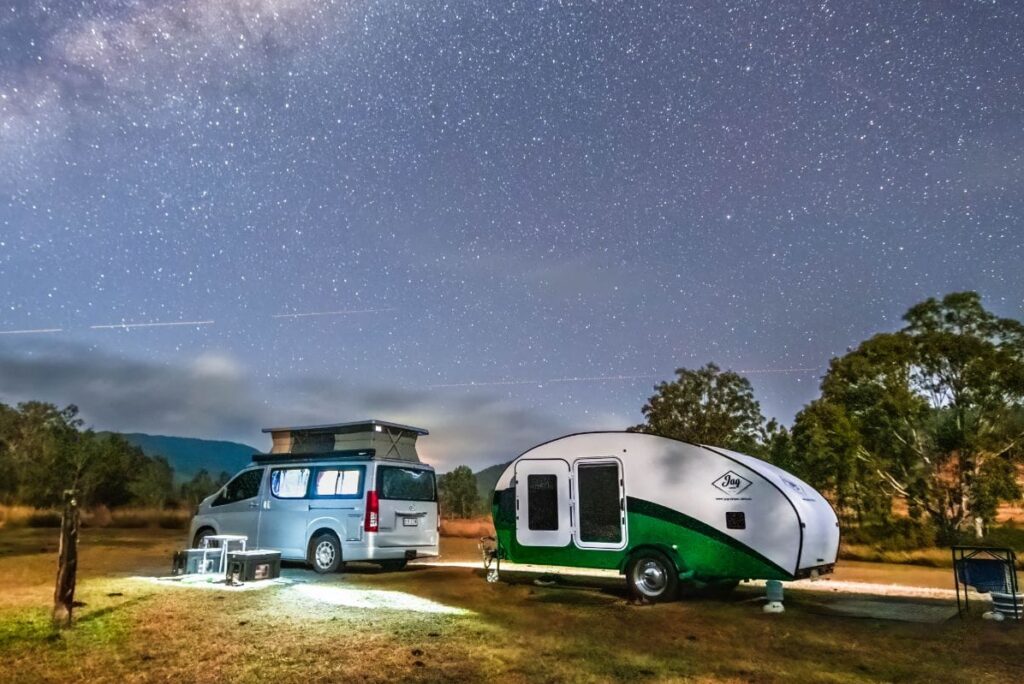
If you’re early in your research and wondering what to tow behind your car, put aerodynamics near the top of your checklist. It’ll influence how much your holiday costs in fuel or charging, whether your small car or EV is a realistic tow vehicle, and how relaxed you feel at the end of a long drive.
JAG Camper’s range of aerodynamic teardrop campers is designed around exactly that idea – helping you Explore More, Tow Less with a setup that works with your car, not against it.
You can dive deeper into the campers here:
And if you’re not sure which model fits your tow vehicle or travel style, you can always reach out via the contact page on the site and talk through your options before you commit.

