If you own an electric vehicle and want to tow a caravan or camper, the smartest place to start is not brand loyalty. It is weight, shape, towing capacity and real-world range.
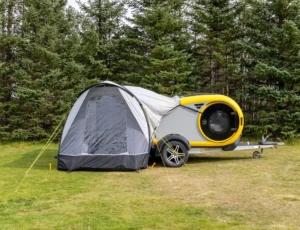
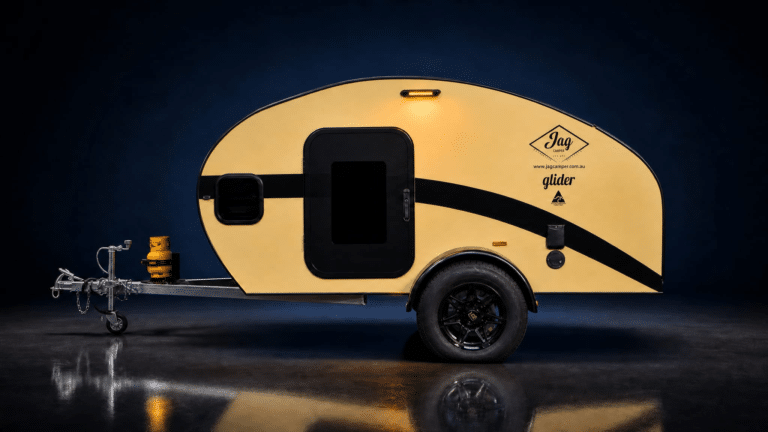
This guide is written for Australian EV owners who are searching for practical caravan and camper options. It explains what different EVs can tow, what type of camper makes sense at each towing limit, and where lightweight campers fit into the picture, including local examples such as the JAG Glider and JAG Teardrop Camper.
JAG Camper examples are included because we build lightweight campers in Brisbane, but the advice is broader than our own range. The same principles apply whether you are comparing a teardrop camper, compact caravan, imported pod camper or small off-road camper.
Table of Contents
Quick EV Towing Guide
| EV tow rating | Best camper type to consider | General advice |
|---|---|---|
| 500kg | Small trailer only | Usually too low for practical camper towing. |
| 750kg to 1000kg | Ultra-light camper | Keep weight low, watch payload and towball download. |
| 1250kg | Lightweight camper or small teardrop | Useful middle ground, but still not full-size caravan territory. |
| 1500kg to 1600kg | Lightweight teardrop or compact caravan | The sweet spot for many EV owners. |
| 2500kg | Broader caravan/camper range | Still consider lighter options for efficiency and range. |
How to Choose a Camper for an EV
Before choosing a camper, check the EV’s braked towing capacity, towball download, gross vehicle limits, approved towbar setup, trailer brake requirements and the real loaded weight of the camper. Do not rely only on a brochure tare weight.
A lighter camper gives you more margin. It can also make the EV feel more settled, reduce energy use and make charging stops easier to plan.
Aerodynamics and Range
Every trailer reduces EV range, but not all trailers do it equally. A tall, square caravan creates more drag than a lower-profile camper. Drag becomes especially important at highway speeds, where the EV has to push a much larger shape through the air.
For this reason, many EV owners are better served by lightweight, aerodynamic campers rather than full-height caravans. A lower camper can help reduce drag, preserve range and make long-distance EV towing less frustrating.
Charging Camper Systems From an EV
Some modern camper setups can charge their house battery systems from the tow vehicle. Depending on the electrical setup, an EV or plug-in hybrid can help top up camper systems such as lights, fridge, pump, device charging and supported 12V accessories.
This does not mean the camper replaces proper EV charging infrastructure, and it does not mean the camper can recharge the EV’s main traction battery. It simply gives campers another useful power source for the camping side of the setup.
EV Model Recommendations
Use these as buyer-guide recommendations only. Always confirm your exact vehicle variant, model year, towbar approval, towball download, trailer brakes and loaded camper weight before towing.
Tesla Model Y
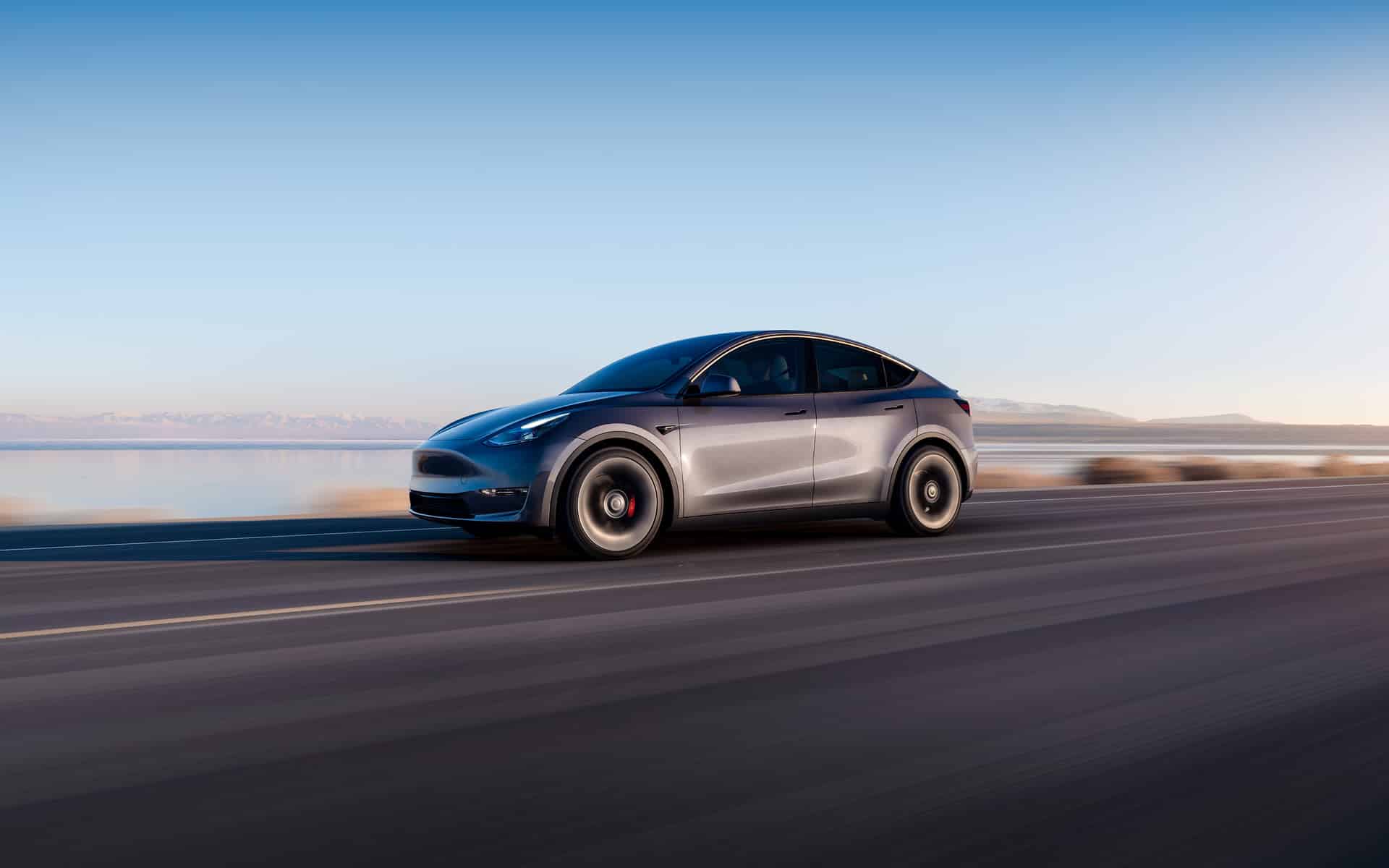
Towing rating to check: up to 1600kg braked when correctly equipped
Best camper type: lightweight teardrop camper, compact caravan or small aerodynamic camper
Example lightweight fit: For a local Australian-made example, both the Glider and Teardrop Camper sit in this lightweight camper category
Buyer note: One of the better mainstream EV tow vehicles, but range will still drop when towing.
Tesla Model 3
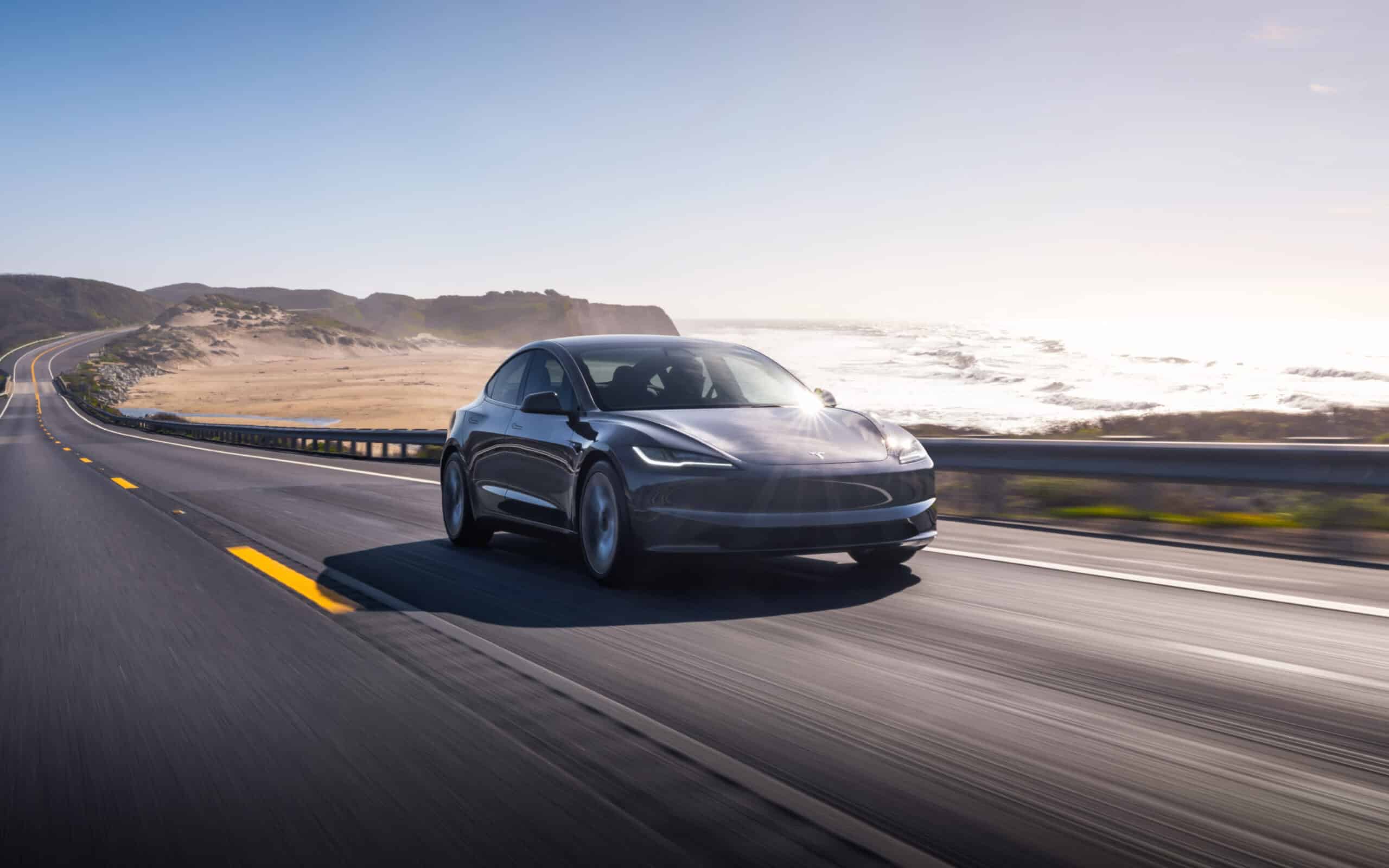
Towing rating to check: up to 1000kg braked with the Tesla tow package
Best camper type: ultra-light camper or very small teardrop
Example lightweight fit: The Glider is the closer lightweight example; heavier campers need careful legal and loaded-weight checks
Buyer note: Good for lightweight camper searches, but less flexible than the Model Y.
BYD Atto 3
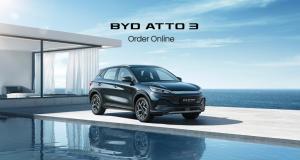
Towing rating to check: around 750kg braked
Best camper type: very light camper only, with careful loading
Example lightweight fit: The Glider is the lightest local example to discuss, but buyers must confirm final loaded weight and towball limits before towing
Buyer note: This is a lower tow-rating EV, so do not assume every camper will suit it.
Source: BYD Atto 3 product/spec source
BYD Seal
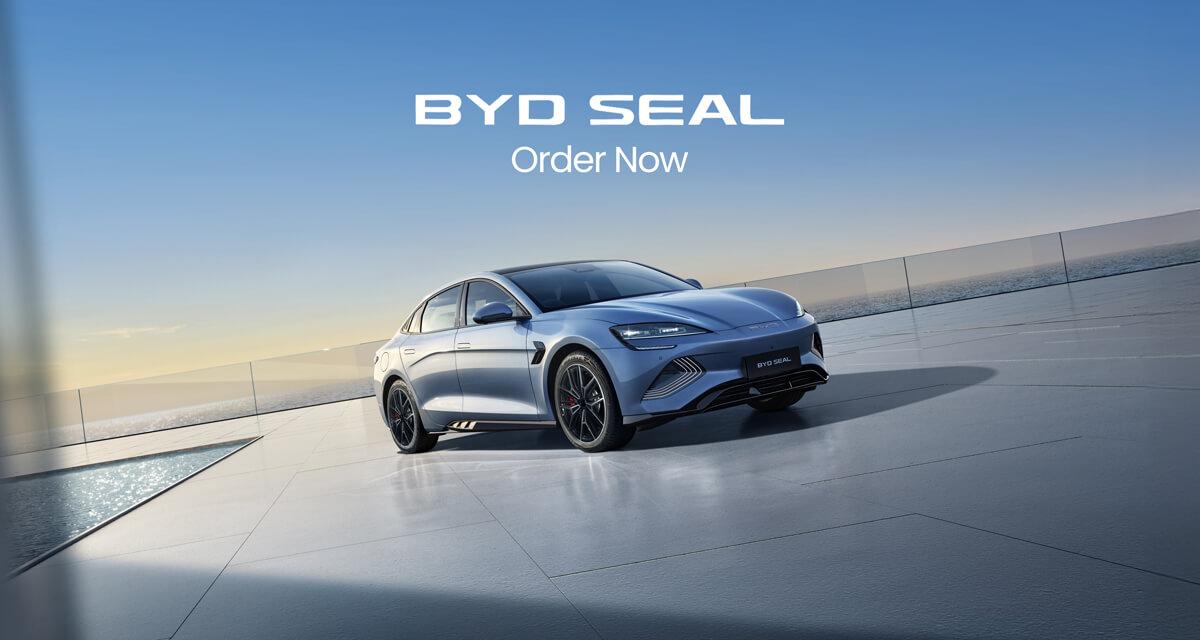
Towing rating to check: variant-dependent, commonly 750kg on lower variants and up to 1500kg on Performance
Best camper type: ultra-light camper for lower variants; lightweight teardrop or compact camper for higher-rated variants
Example lightweight fit: The Glider suits the lower-rated towing conversation; a roomier teardrop becomes more realistic on higher-rated variants
Buyer note: Variant choice matters more than the badge. Check the exact Seal model before buying a camper.
Source: BYD Seal product/spec source
BYD Sealion 7
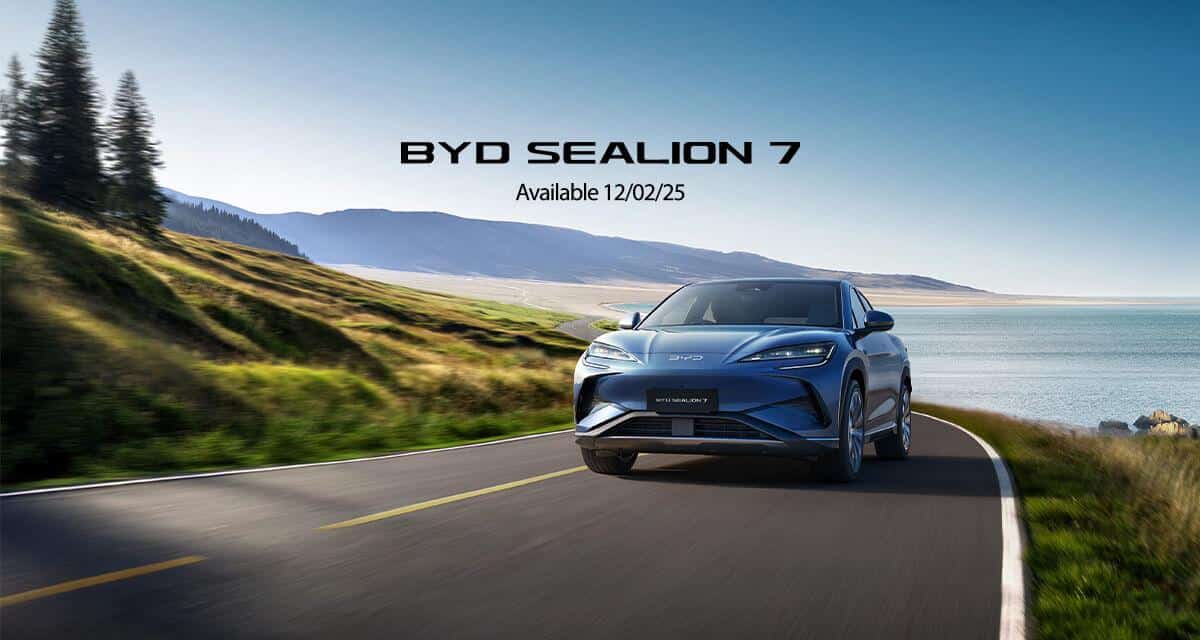
Towing rating to check: variant-dependent, around 750kg RWD and up to 1500kg AWD
Best camper type: ultra-light camper for RWD; lightweight teardrop or compact camper for AWD
Example lightweight fit: The Glider is the safer lightweight example for lower-rated variants; a Glider or teardrop-style camper can suit higher-rated AWD variants
Buyer note: This is one of the newer EVs people are likely to search with towing questions.
BYD Shark 6
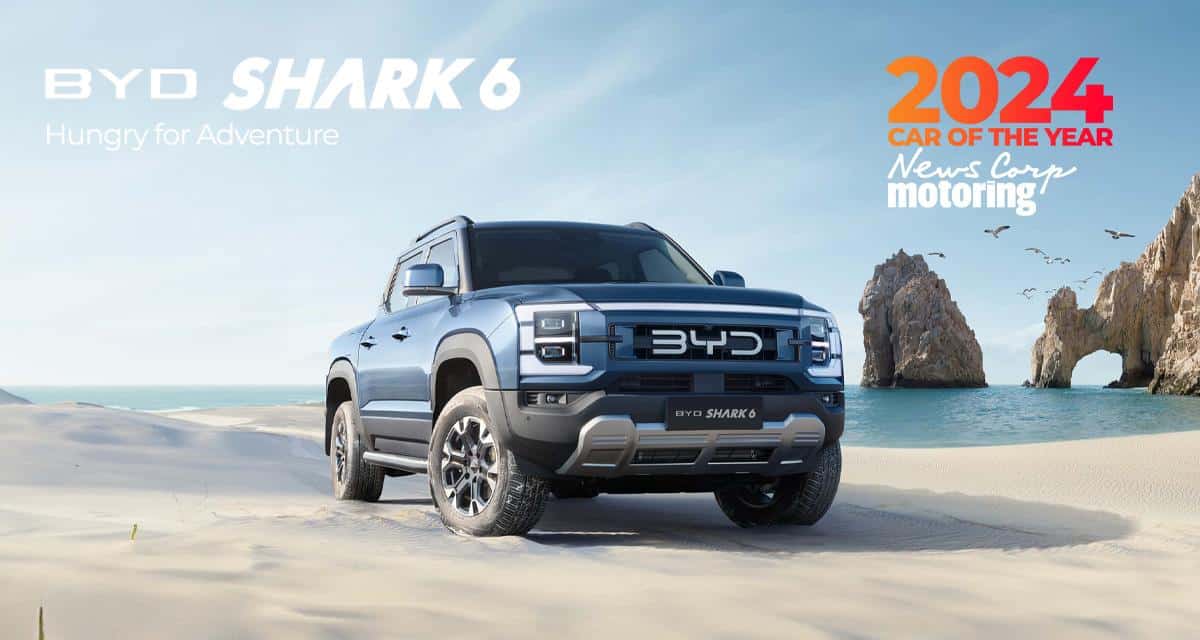
Towing rating to check: 2500kg braked
Best camper type: broad camper and caravan choice, but lighter still helps efficiency
Example lightweight fit: Lightweight campers sit comfortably below the Shark 6 towing limit, so the decision becomes comfort, size and off-road needs
Buyer note: The Shark 6 is a plug-in hybrid ute, not a pure EV, but it belongs in this guide because EV/PHEV tow buyers cross-shop it heavily.
Source: BYD Shark 6 product/spec source
Kia EV5
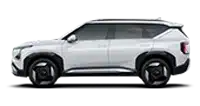
Towing rating to check: variant-dependent, with higher-rated versions around 1250kg braked
Best camper type: lightweight camper or small teardrop on suitable variants
Example lightweight fit: The Glider is the cleaner lightweight fit; larger campers need more careful matching to the exact variant and loaded weight
Buyer note: Some EV5 variants are not practical camper tow vehicles, so check the brochure and exact model.
Source: Kia EV5 product/spec source
Kia EV6
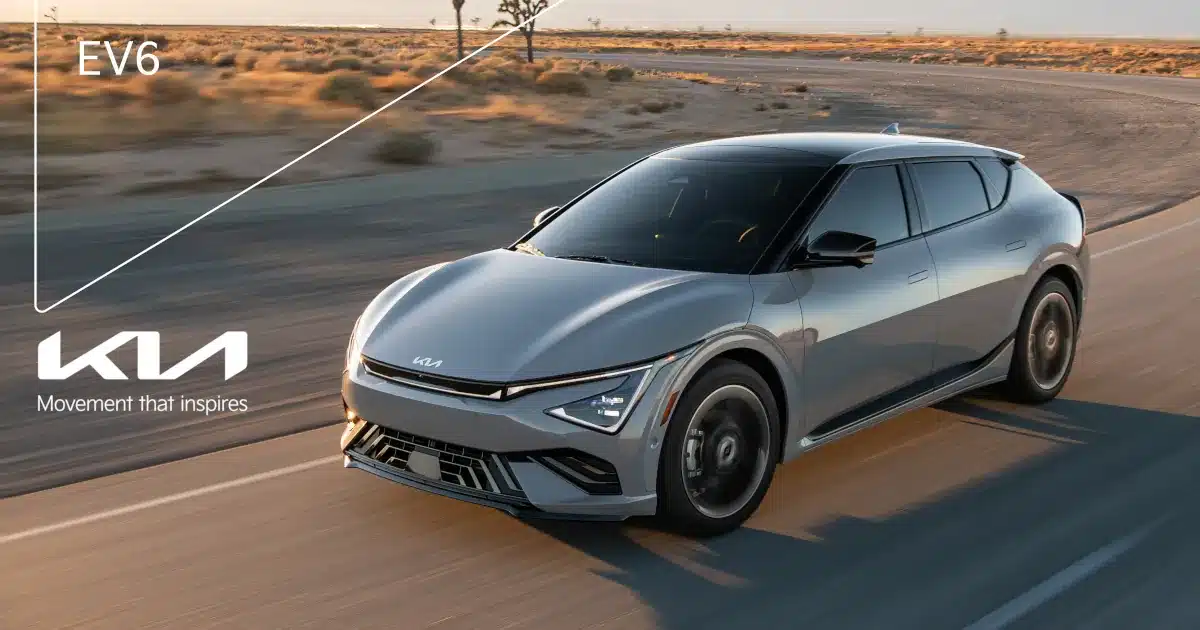
Towing rating to check: up to around 1600kg braked depending on variant/spec
Best camper type: lightweight teardrop camper or compact caravan
Example lightweight fit: Both a light off-road camper and a compact teardrop are worth comparing for EV6 owners
Buyer note: A strong EV towing candidate, especially for people who want a lighter camper rather than a full-size caravan.
Source: Kia EV6 product/spec source
Kia EV9
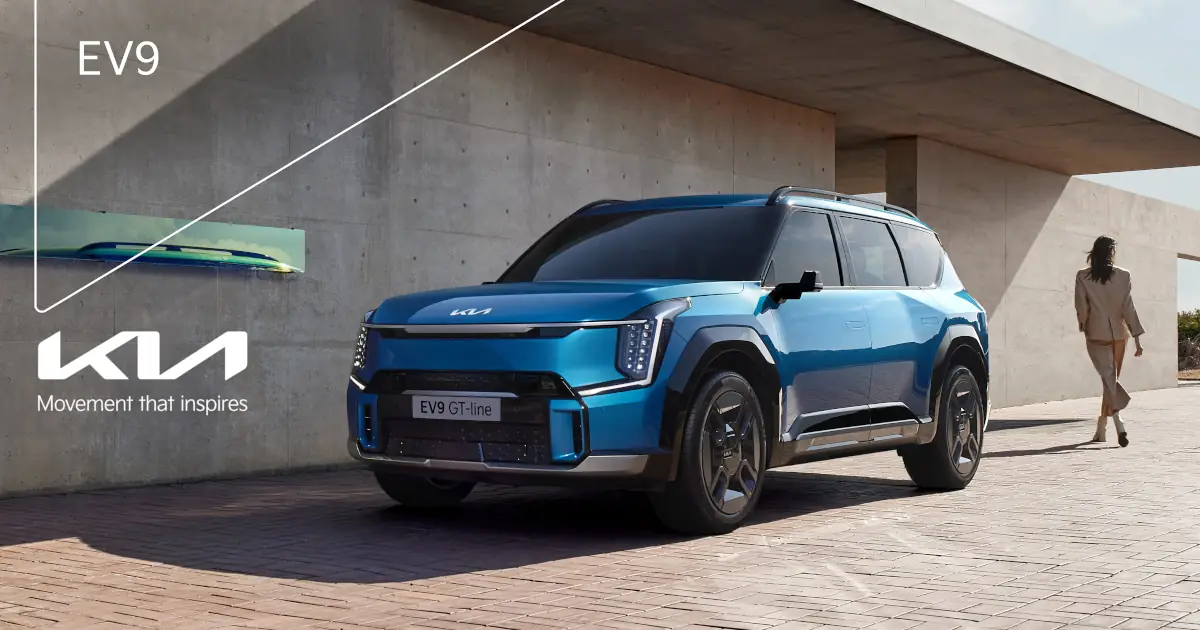
Towing rating to check: up to around 2500kg braked depending on variant/spec
Best camper type: wide range of caravans and campers, though lighter still improves efficiency
Example lightweight fit: Lightweight campers are well within the kind of camper category EV9 buyers may compare
Buyer note: The EV9 has big towing capacity for an EV, but a heavy caravan will still affect range and charging plans.
Source: Kia EV9 product/spec source
Hyundai Ioniq 5
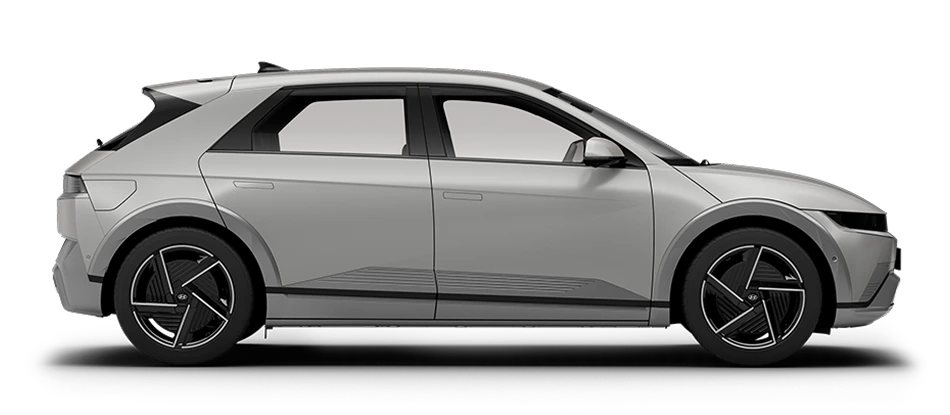
Towing rating to check: up to around 1600kg braked depending on variant/spec
Best camper type: lightweight teardrop camper or compact caravan
Example lightweight fit: A light off-road camper or compact teardrop are both relevant for Ioniq 5 owners comparing lightweight campers
Buyer note: A practical EV tow vehicle when matched with a sensible camper weight and aerodynamic profile.
Polestar 2
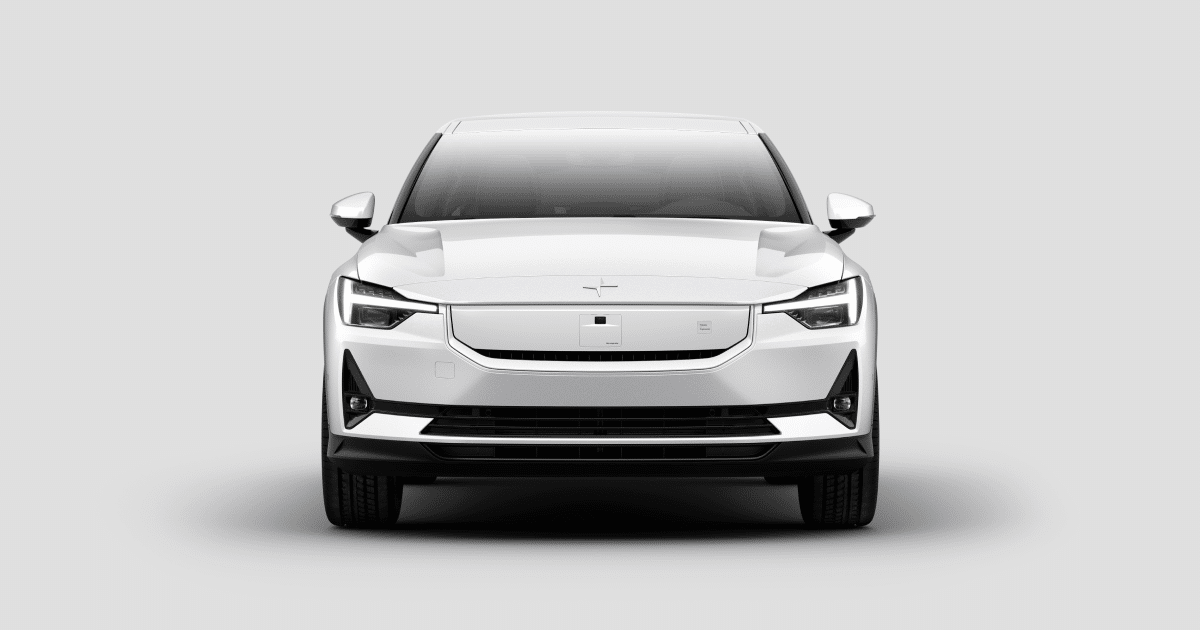
Towing rating to check: up to around 1500kg braked depending on variant/spec
Best camper type: lightweight camper or compact teardrop
Example lightweight fit: A light off-road camper or compact teardrop may both be relevant depending on loaded weight and variant
Buyer note: Suits buyers wanting a premium EV with a compact camper, not a large heavy caravan.
Source: Polestar 2 product/spec source
MG4
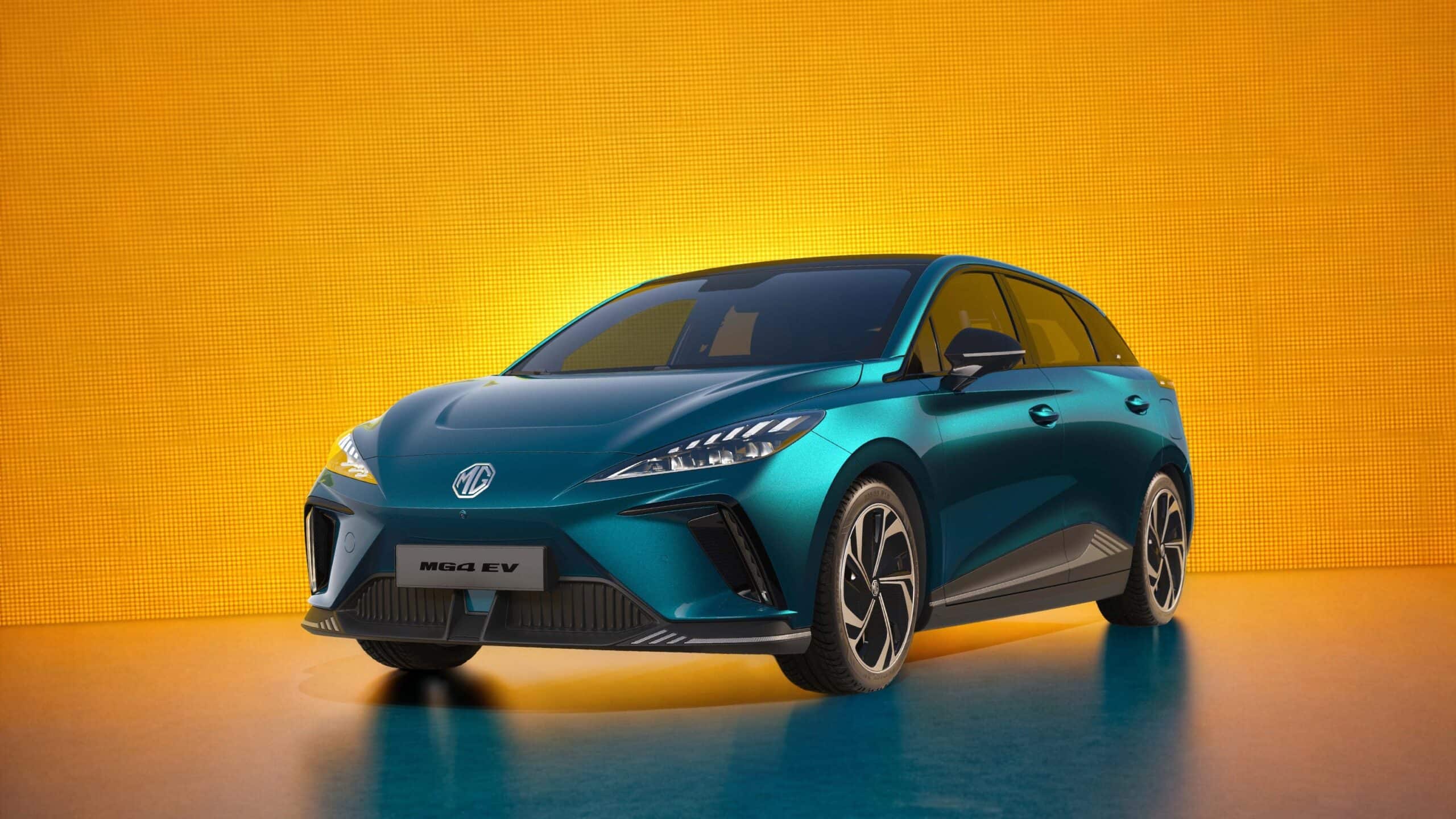
Towing rating to check: around 500kg braked
Best camper type: small trailer or very light utility load, not a practical camper setup
Example lightweight fit: No camper is recommended as a straightforward MG4 match without very careful weight checks
Buyer note: A good daily EV, but not the right vehicle if camper towing is a priority.
Source: MG4 product/spec source
Where JAG Campers Fit
For buyers comparing Australian-made lightweight campers, JAG has two relevant options.
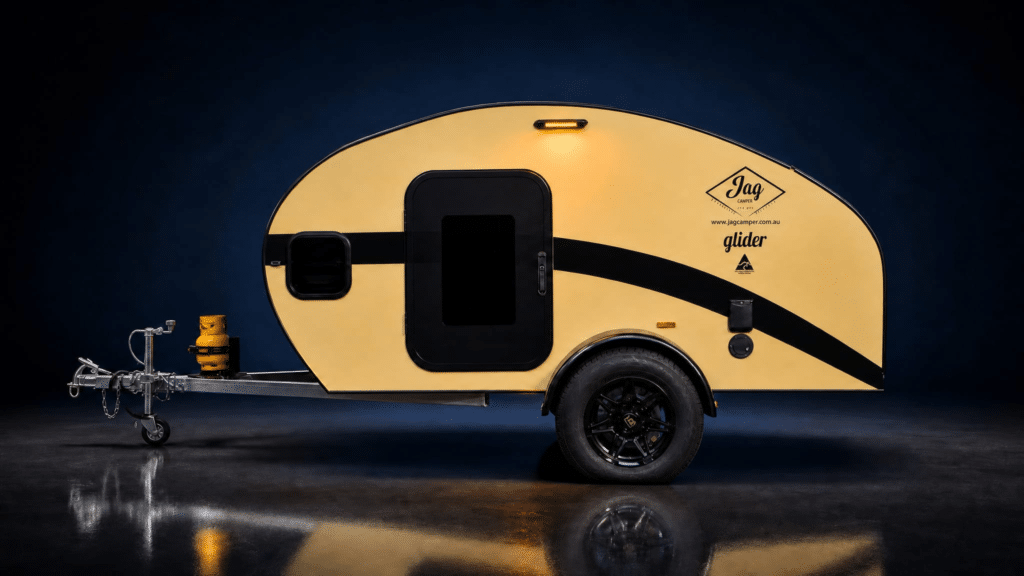
JAG Glider
The JAG Glider is the lighter JAG option and the better fit for EV owners with lower towing limits, especially people searching around the 750kg to 1000kg towing category. It is full off-road ready, compact and designed to keep weight down.
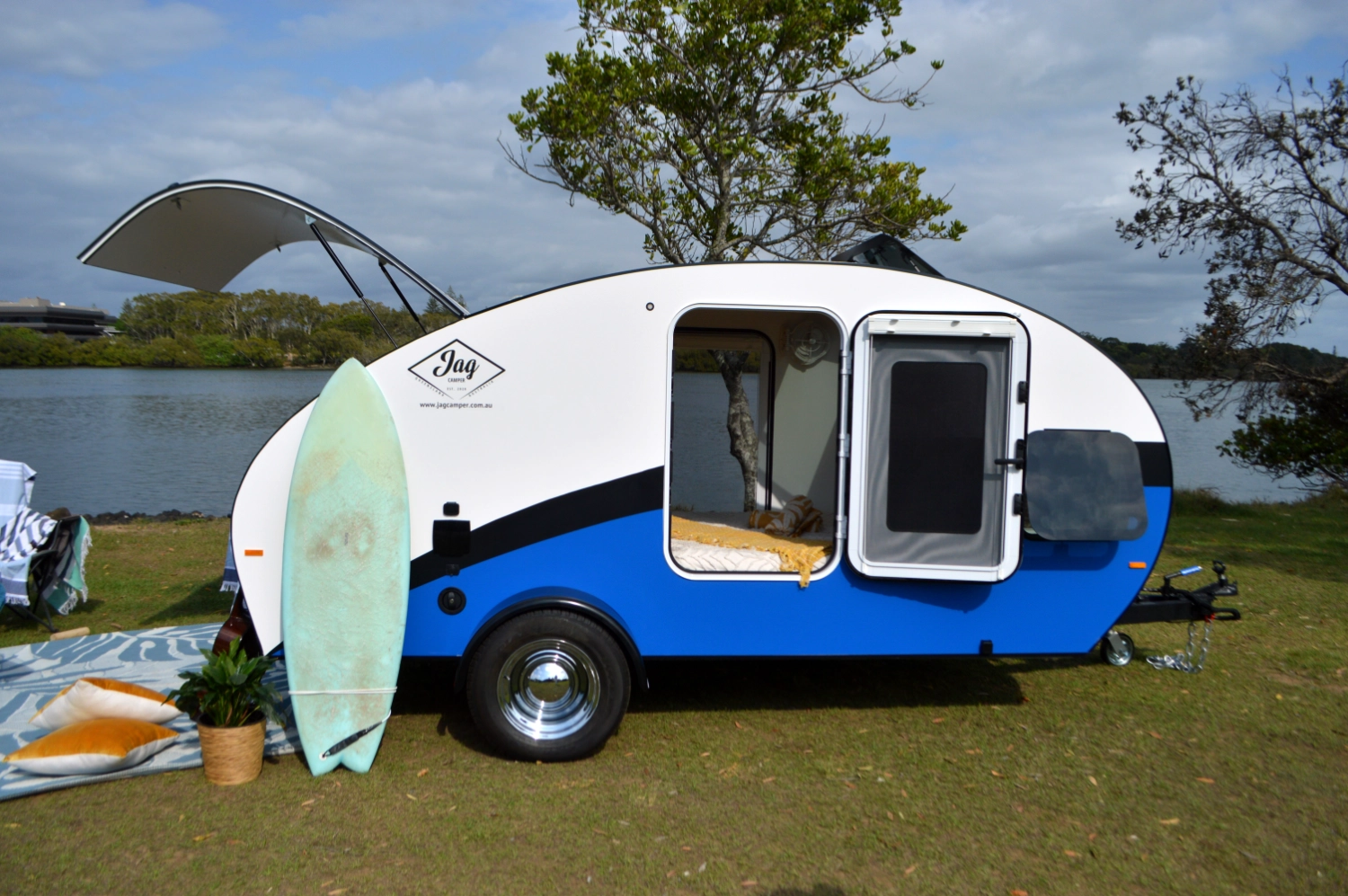
JAG Teardrop Camper
The JAG Teardrop Camper is the roomier touring option. It suits EV owners with stronger towing capacity, especially vehicles around the 1500kg to 1600kg range or above. It gives more comfort than a minimalist camper while staying lighter and lower than many full-size caravans.
Frequently Asked Questions
What is the best caravan for an electric vehicle in Australia?
The best caravan or camper for an EV is usually lightweight, aerodynamic and comfortably within the vehicle’s braked towing capacity. Many EV owners will be better served by a compact camper or teardrop than by a tall, heavy caravan.
Does towing reduce EV range?
Yes. Any trailer will reduce EV range. Weight, height, shape, speed, wind, terrain and driving style all matter. Aerodynamic campers can help reduce drag compared with box-style caravans.
Can a Tesla Model Y tow a camper?
Yes, with the correct towing setup and within Tesla’s published limits. The Model Y is one of the more useful mainstream EVs for lightweight camper towing.
Can a BYD Atto 3 tow a caravan?
The BYD Atto 3 has a lower towing rating, so it is better suited to very light campers or trailers. Buyers should be cautious and check loaded weight carefully.
Is the BYD Shark 6 good for towing?
The BYD Shark 6 has a much higher towing capacity than many EVs and plug-in hybrids, so it gives buyers more options. Lighter campers can still improve efficiency and towing comfort.
Which lightweight camper type is best for EV towing?
For lower tow-rating EVs, an ultra-light camper is usually the better fit. For stronger EV tow vehicles, a compact teardrop camper becomes more realistic if the buyer wants more touring comfort.
Final Recommendation
If you are buying a camper for an EV, do not start by asking which camper is biggest. Start by asking which camper your EV can tow comfortably, legally and efficiently.
For lower-rated EVs, look for ultra-light campers and be conservative. For EVs around 1500kg to 1600kg, compact teardrops and lightweight campers become much more realistic. For high-rated vehicles such as the BYD Shark 6 or Kia EV9, you have more choice, but a lighter aerodynamic camper can still make the trip easier.
To compare JAG’s lightweight Australian-made options, view the JAG Glider and JAG Teardrop Camper.