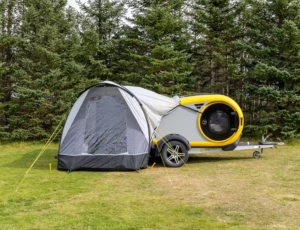
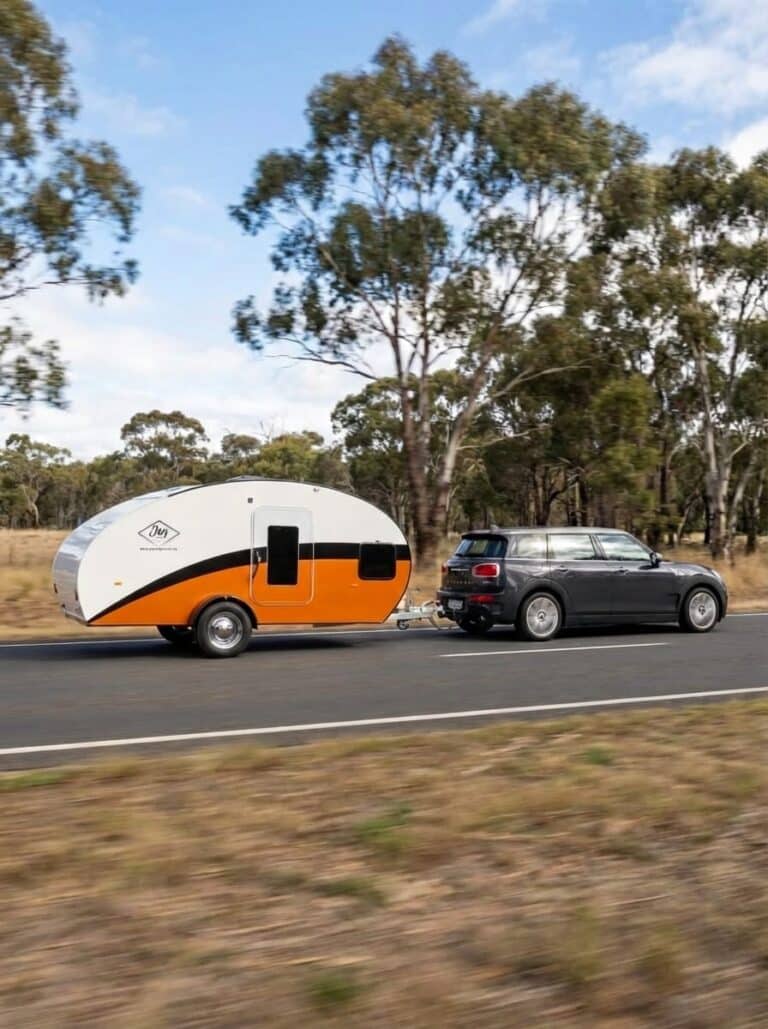
Quick answer: teardrop camper weight is not just the empty tare number. The numbers that matter are tare, ATM, payload, GTM, tow-ball weight and the real loaded weight after water, food, bedding, batteries, tools and camp gear.
Teardrops are popular because they are usually lighter and easier to tow than conventional caravans. But a light design can still be overloaded if the payload is small or the owner packs without checking. The useful skill is knowing how each weight number changes the buying decision.
After reading this, you should be able to read a teardrop camper weight plate, estimate your real loaded weight, and ask better questions before buying.
The teardrop camper weight terms
| Term | Meaning | Buyer question |
|---|---|---|
| Tare | Empty camper weight as specified | What is included and excluded? |
| ATM | Maximum loaded trailer mass when unhitched | What is the absolute loaded limit? |
| Payload | ATM minus tare | How much can I add? |
| GTM | Weight carried by the trailer wheels when hitched | How does the axle/suspension load compare? |
| Tow-ball weight | Load pressing down on the tow vehicle | Does my vehicle allow this? |
Why payload matters more than buyers expect
A teardrop with a low tare but tiny payload may be less useful than a slightly heavier camper with more honest carrying capacity. Payload is where your real camping life goes: water, food, clothes, bedding, kitchen gear, camp chairs, leads, hoses, recovery gear, fridge contents and optional extras.
One litre of water weighs about one kilogram. That single fact catches a lot of buyers. Add 80 litres of water and you have used 80kg of payload before packing food or clothes.
Worked example: weekend teardrop packing
| Item | Typical weight range |
|---|---|
| Water | 40-80kg |
| Food, pantry and drinks | 20-40kg |
| Bedding and clothes | 25-45kg |
| Camp chairs, table and shade | 25-50kg |
| Tools, hoses, cords and recovery basics | 15-35kg |
| Options such as batteries or awnings | Varies significantly |
A couple can easily add 150-250kg to a teardrop for a normal trip. That does not mean teardrops are a bad idea. It means payload should be checked honestly before purchase, especially if you plan off-grid trips or carry water.
Tow-ball weight is part of the vehicle load
Tow-ball weight is easy to forget because it belongs to the trailer but loads the car. If the teardrop has 90kg on the ball, that 90kg comes out of the vehicle’s payload along with passengers, luggage and accessories. A small SUV can run out of payload before it runs out of towing capacity.
Ask for measured tow-ball weight in a normal loaded setup. It can change depending on where water, batteries and gear sit inside the camper.
How to compare teardrops by weight
| Comparison | Better sign | Warning sign |
|---|---|---|
| Tare | Low enough for your vehicle with margin | Close to the vehicle’s tow limit before packing |
| Payload | Enough for your real trips | Only enough if tanks stay empty |
| Ball weight | Within vehicle limit after loading | Unknown or close to the maximum |
| Options | Weights clearly listed | Options promoted without weight impact |
| Proof | Compliance plate or weighbridge info available | Only vague “lightweight” language |
How to check your real teardrop weight
The simplest way to remove guesswork is to weigh the camper as you actually travel. Pack it with water, bedding, food, gas, kitchen gear, cords, hoses, tools and the options you normally carry. A weighbridge can tell you whether the loaded trailer is inside its limits and inside the vehicle’s towing capacity.
It is also worth checking ball weight separately with suitable equipment or help from a professional. If the camper is legal overall but heavy on the ball, your tow vehicle can still be overloaded. If the ball weight changes a lot depending on where gear is packed, build a repeatable packing method instead of guessing each trip.
For buyers comparing second-hand teardrops, this step is even more important. Extra batteries, storage boxes, spare wheels, bike racks and custom modifications may not be reflected in the original brochure weight.
Common teardrop weight mistakes
- Shopping by tare only. Tare is useful, but you tow the loaded camper.
- Forgetting water and food. Payload disappears faster than expected.
- Adding every option. Batteries, awnings, hot water and storage boxes can change the final number.
- Ignoring vehicle payload. Ball weight belongs in the car’s payload calculation.
- Never visiting a weighbridge. A real measurement is better than a guess.
Where JAG fits
JAG’s range is built around lightweight teardrop-style camping. The JAG Glider is the lightest direction in the range, while the JAG Teardrop Camper gives more teardrop comfort in a compact package. For either model, buyers should compare current tare, ATM, payload, ball weight and options against their own tow vehicle.
Questions to ask before buying
- What is included in tare?
- What is the ATM and payload?
- What is the measured ball weight?
- How much do common options add?
- What does the camper weigh with water and trip gear?
- Can I see the compliance plate or a weighbridge ticket?
- Will my vehicle still have payload left after ball weight and passengers?
Useful sources
FAQ
What is a good weight for a teardrop camper?
A good weight is one your vehicle can tow with margin after the camper is loaded. The right answer depends on your vehicle, payload and trip gear.
Is tare the same as loaded weight?
No. Tare is the empty camper weight. Loaded weight includes water, food, bedding, tools, options and personal gear.