Quick answer: camper trailer electric brakes help the trailer slow itself instead of relying only on the tow vehicle. Buyers should check the trailer weight, brake type, brake controller requirements, tow vehicle compatibility and whether the loaded camper legally needs brakes.
Electric brakes are not just a technical feature. They affect safety, legality, towing confidence and whether a camper suits a smaller vehicle. If you are comparing lightweight campers, it is worth understanding the basics before you buy.
After reading this, you should know what electric brakes do, when to ask about them, and what information to confirm with the camper seller and towbar installer.
What electric brakes do
Electric trailer brakes use an electrical signal from the tow vehicle to apply braking at the trailer wheels. In most setups, a brake controller in the vehicle manages how strongly the trailer brakes apply. The goal is a balanced combination where the camper helps slow itself instead of pushing the car.
| Part | Role | Buyer check |
|---|---|---|
| Trailer brakes | Provide braking at trailer wheels | Are they fitted and rated for the trailer? |
| Brake controller | Sends the braking signal | Does your vehicle need one installed? |
| Breakaway system | Emergency braking if trailer separates, where required | Does the trailer weight category require it? |
| Plug wiring | Connects vehicle to trailer systems | Is the tow vehicle wired correctly? |
| Service adjustment | Keeps braking performance consistent | Are brakes inspected and adjusted? |
When do camper trailers need brakes?
Brake requirements depend on trailer mass and applicable Australian road rules. A common threshold buyers hear is 750kg, because trailers over that loaded mass generally need brakes. But do not use a rule-of-thumb as your only source. Check your state guidance, trailer compliance information and the camper’s loaded GTM/ATM.
The important word is loaded. A camper that is under a threshold empty may cross it once water, battery, food and camping gear are added. If you are close to any limit, get the camper weighed.
Worked example: why loaded weight changes the brake question
Imagine a camper that weighs 700kg empty. Add 60L of water, food, bedding, tools and camp furniture, and it may be around 850kg loaded. A buyer who only looked at the empty weight may think brakes are not important. The loaded weight tells a different story.
This is also why trailer brakes should be discussed at the same time as payload. Brakes, weight and vehicle compatibility are connected, not separate checklist items.
Electric brakes vs override brakes
Buyers will often hear different brake terms when comparing campers. The exact system matters less than whether it is suitable for the trailer weight and correctly matched to the tow vehicle, but it helps to know the language before speaking to a seller or towbar installer.
| Brake type | How buyers usually experience it | What to confirm |
|---|---|---|
| Electric brakes | Controlled through the vehicle using a brake controller or integrated system | Controller, wiring, adjustment and vehicle compatibility. |
| Mechanical/hydraulic override brakes | Trailer braking responds through the coupling as the trailer pushes forward | Trailer rating, service condition and whether it suits the camper. |
| No trailer brakes | Vehicle does all braking work | Only suitable where the loaded trailer and vehicle rules allow it. |
If you are unsure which system a camper uses, ask before you buy. It affects the tow vehicle setup, maintenance and how the trailer feels on the road.
Questions to ask the camper seller
- Are electric brakes fitted as standard or optional?
- What trailer weight are the brakes rated for?
- What is the camper’s GTM, ATM and typical loaded weight?
- Does the camper require a brake controller in the tow vehicle?
- What plug and wiring setup is required?
- Is a breakaway system required for this camper category?
- How often should the brakes be inspected or adjusted?
What to check on your tow vehicle
- Whether the vehicle can tow the camper’s loaded weight.
- Whether the towbar rating matches the job.
- Whether the wiring supports the required brake system.
- Whether a brake controller is installed or needed.
- Whether the vehicle warranty/manual has towing conditions.
- Whether ball weight and payload remain legal after passengers and luggage.
Common electric brake mistakes
- Assuming light campers never need brakes. Loaded mass is what matters.
- Buying before checking vehicle wiring. The camper and tow vehicle need to communicate properly.
- Ignoring brake controller setup. Poor adjustment can make towing jerky or ineffective.
- Thinking brakes replace correct loading. Bad weight distribution can still make the combination unsafe.
- Skipping maintenance. Brakes need inspection, adjustment and servicing.
Where JAG fits
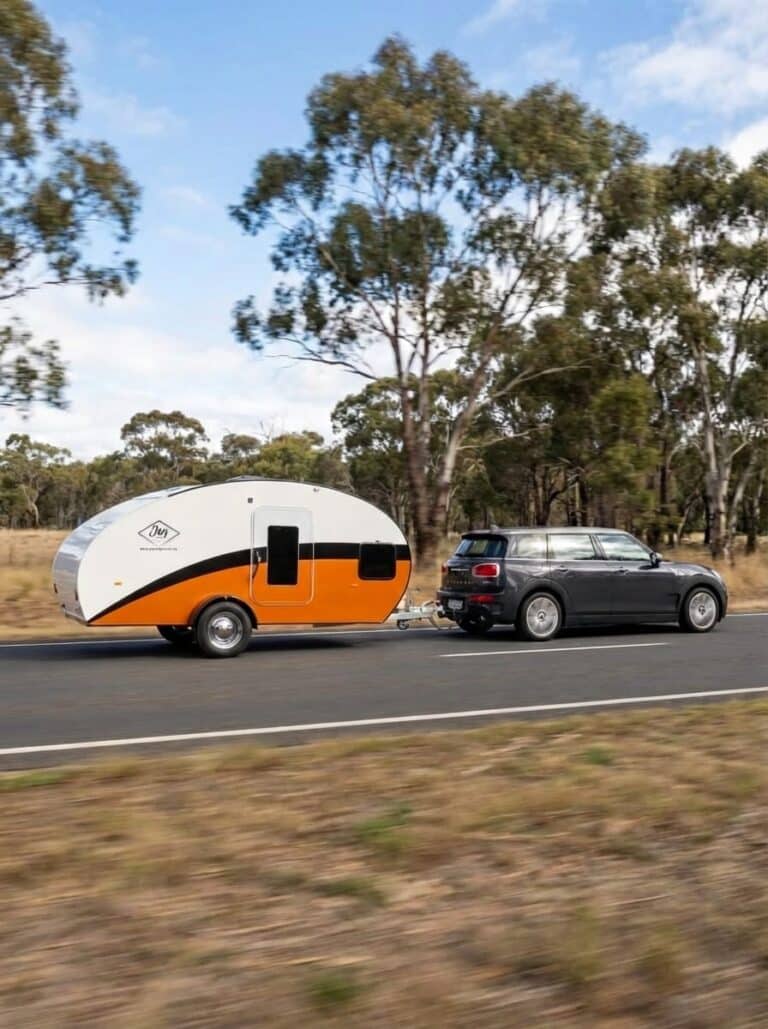
JAG buyers should treat brakes as part of the vehicle-matching conversation. A lightweight camper may be easier to tow, but the correct braking setup still depends on the model, loaded weight and tow vehicle. If you are comparing the JAG Glider or JAG Teardrop Camper, ask for the current brake setup and towing requirements for your intended configuration.
Buyer checklist
- Confirm loaded camper weight, not just tare.
- Confirm whether brakes are fitted and what type.
- Confirm brake controller requirements.
- Confirm vehicle wiring and towbar compatibility.
- Check state towing guidance and trailer compliance information.
- Test brake feel before a long trip.
- Include brake servicing in your maintenance plan.
Useful sources
FAQ
Do all camper trailers need electric brakes?
No. Requirements depend on loaded trailer mass and the braking system used. Check the camper’s weight category and your local rules.
Do I need a brake controller?
If the camper uses electric brakes, your tow vehicle will usually need a suitable brake controller or compatible integrated system.
Are electric brakes worth it on a lightweight camper?
If the loaded trailer weight or vehicle match calls for brakes, they are a safety and compliance issue, not just an optional comfort feature.