
If you are considering a Breath Trailer, the first thing you need to understand is that the product appears to match a Chinese-manufactured camper sold by the overseas factory source. You can inspect the supplier listing and, in principle, buy directly from that source instead of paying Breath Trailer’s Australian retail markup and intermediary margin.
That makes the origin question even more important. Breath has promoted its campers as Australian-made and associated them with a Sydney factory. At the same time, the public product comparisons show what appears to be a complete match across the major visible features of the Chinese model: the exterior shape, rear kitchen, doors, windows, interior cabinetry, shower and bed layout.
The public source listings also show that Australian buyers can approach the Chinese supplier directly, cutting out the middle layer represented by Breath Trailer.
That is the central issue in this article: customers may be led to believe they are buying a locally manufactured Australian camper when the product appears to be the same Chinese model being imported and sold at a substantial markup.
The problem is not that the campers are made in China. Importing from China is legal and can be a legitimate business model. The problem is describing an imported product as Australian-made when the evidence does not support that description.
A customer who knowingly buys a Chinese-made camper can make an informed decision about price, features, warranty and support. A customer who pays a premium because they believe the camper was manufactured in Australia is making a different decision.
The evidence in one sentence
Breath Trailer has promoted its campers as Australian-made and built from a Sydney factory, while the public product evidence shows close matches to Chinese-manufactured campers available from Henan OnlyWe Machinery Co. and Alibaba.
That contradiction deserves a direct explanation from Breath Trailer.
Evidence 1: the Breath Max matches a Chinese RT-350TU listing
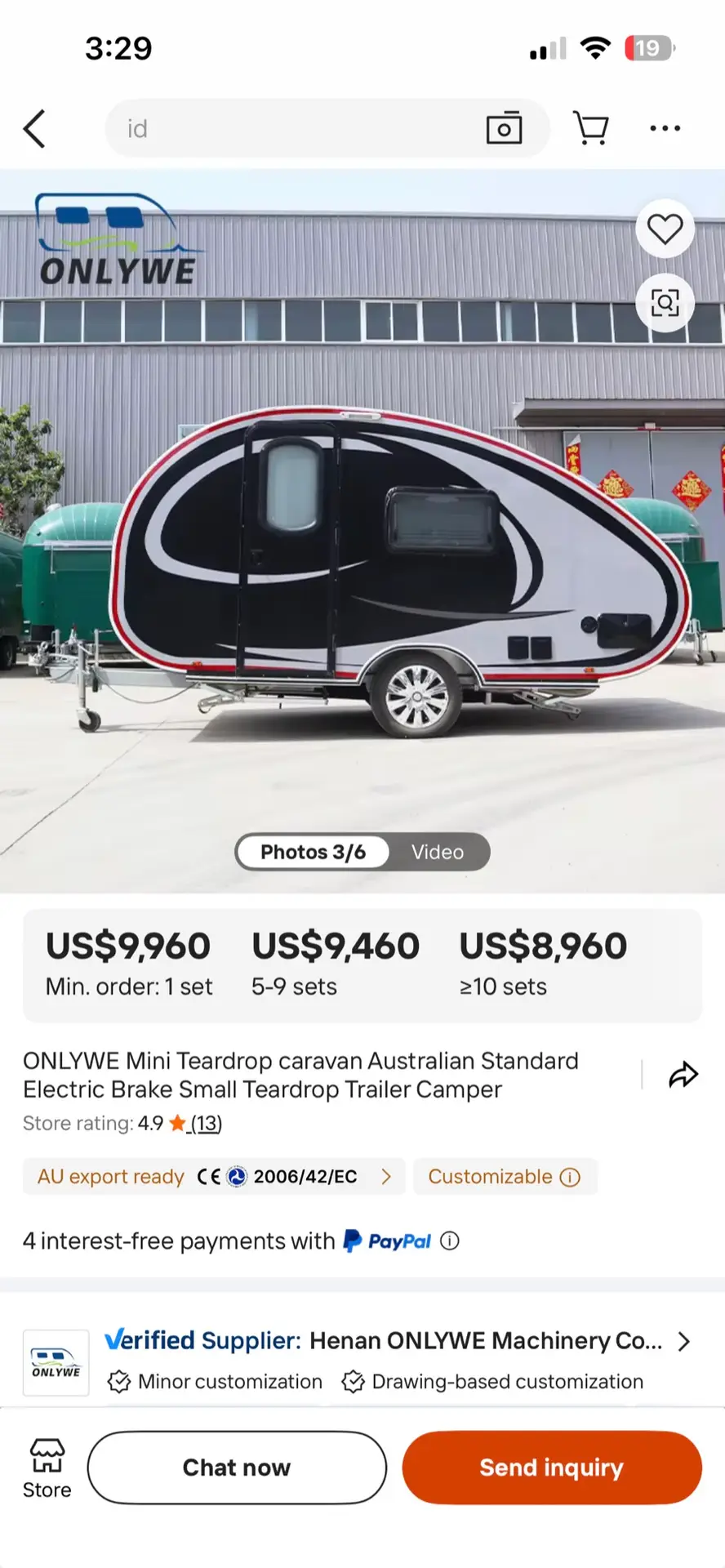
The comparison shows similarities in the overall body shape, rear kitchen arrangement, door and window placement and exterior proportions.
The matching Chinese product is publicly available from Henan OnlyWe Machinery Co. and through an Alibaba RT-350TU listing.
A product being similar to another product does not, on its own, prove the complete supply chain. But when the same model style, body layout and component arrangement appear in an overseas supplier listing, the seller needs to explain the relationship clearly.
You can buy the matching product from China
This is the point that Australian buyers should be able to check for themselves.
The Chinese supplier page and Alibaba listing are public. The product shown there is not a vague concept or a generic sketch. It is a complete teardrop camper offered for export.
View the Chinese RT-350TU-style supplier listing View the RT-350TU Alibaba listing
Buy direct from the Chinese source and compare the price
The public source listings also raise a major price question. If a buyer is prepared to deal directly with the Chinese supplier, arrange shipping and manage Australian compliance, they may be able to buy the matching product for substantially less than the price advertised by Breath Trailer.
The dated price comparison published in the source article, recorded on 2 August 2026, shows:
- Breath Max: $42,900 AUD compared with the Chinese RT-350TU listing at $12,860 AUD. That is a gross difference of $30,040 before shipping and other import costs.
- Breath Essential or Plus: $28,314 AUD compared with the Chinese RT-290T listing at $7,188 AUD. That is a gross difference of $21,126 before shipping and other import costs.
Those figures indicate a very large retail price difference and suggest a substantial markup over the Chinese source price. They do not prove the final landed cost or the exact amount a customer would save. Direct buyers would need to allow for freight, insurance, GST, customs and port charges, inspection, Australian compliance, registration, modifications, local delivery, warranty risk and after-sales support.
The practical point remains: if the product is imported from the same Chinese source, a buyer should be told that clearly. They can then decide whether paying a large Australian retail premium is worthwhile for local sales support, preparation, warranty handling and convenience.
If Breath is adding significant value in Australia, it should explain exactly what that value includes. If the product is being marketed as Australian-made while the body and major components are imported, the customer cannot make a fair price comparison.
The question is simple: if the Breath Max is made in Australia, why does it share such close visual similarities with this Chinese export product, and why is the price difference so large?
Evidence 2: the interiors and cabinetry also match
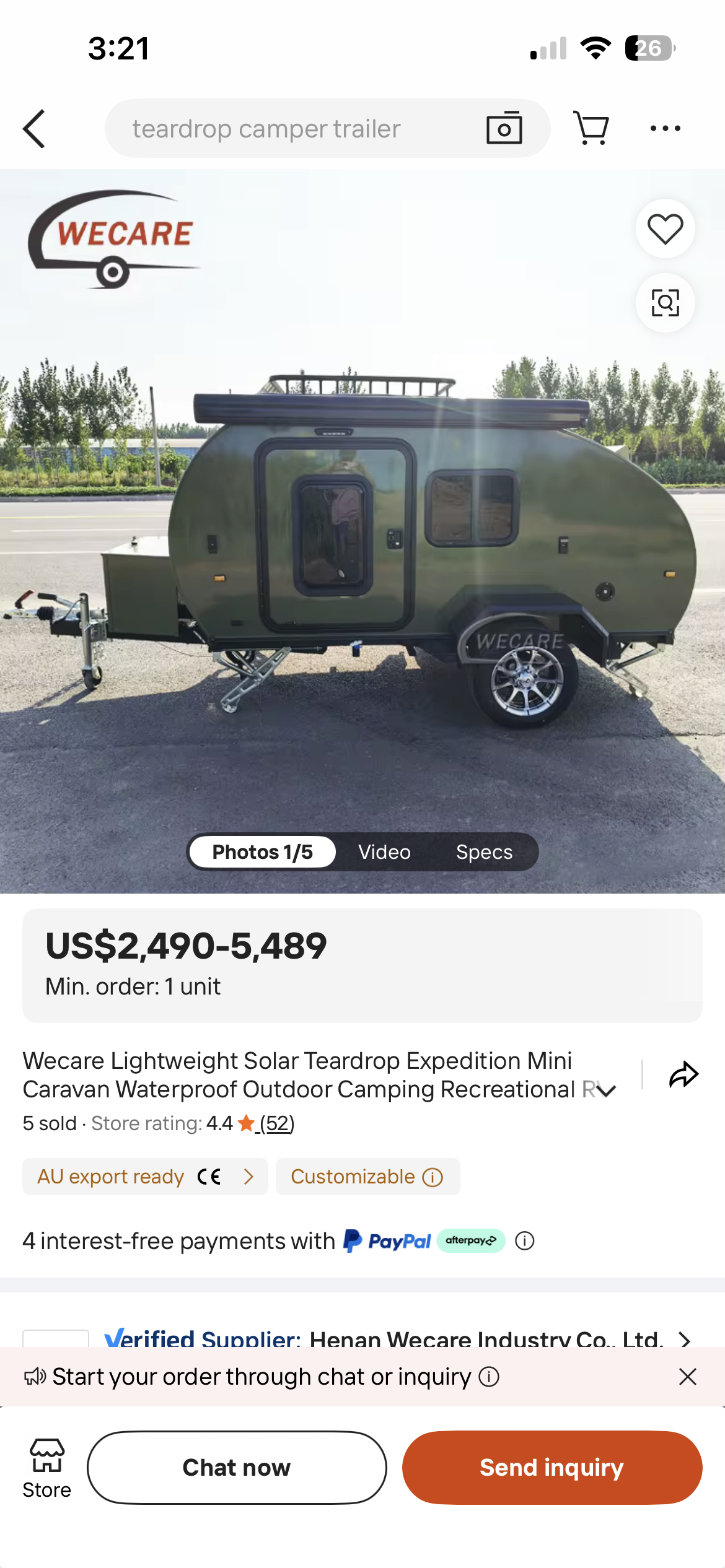
The similarities are not limited to the outside shell.
The interior comparison shows similar arrangements for the bed, cabinetry, shower and internal layout. Buyers should be able to ask whether the shell and cabinetry were imported as completed components, manufactured from a Chinese design, or built entirely in Australia.
A clear answer would include:
- Where the shell was manufactured
- Where the cabinetry was cut and assembled
- Where the chassis was manufactured
- Which components arrived from overseas
- What work was completed in Australia
Evidence 3: the kitchen layout is also closely matched
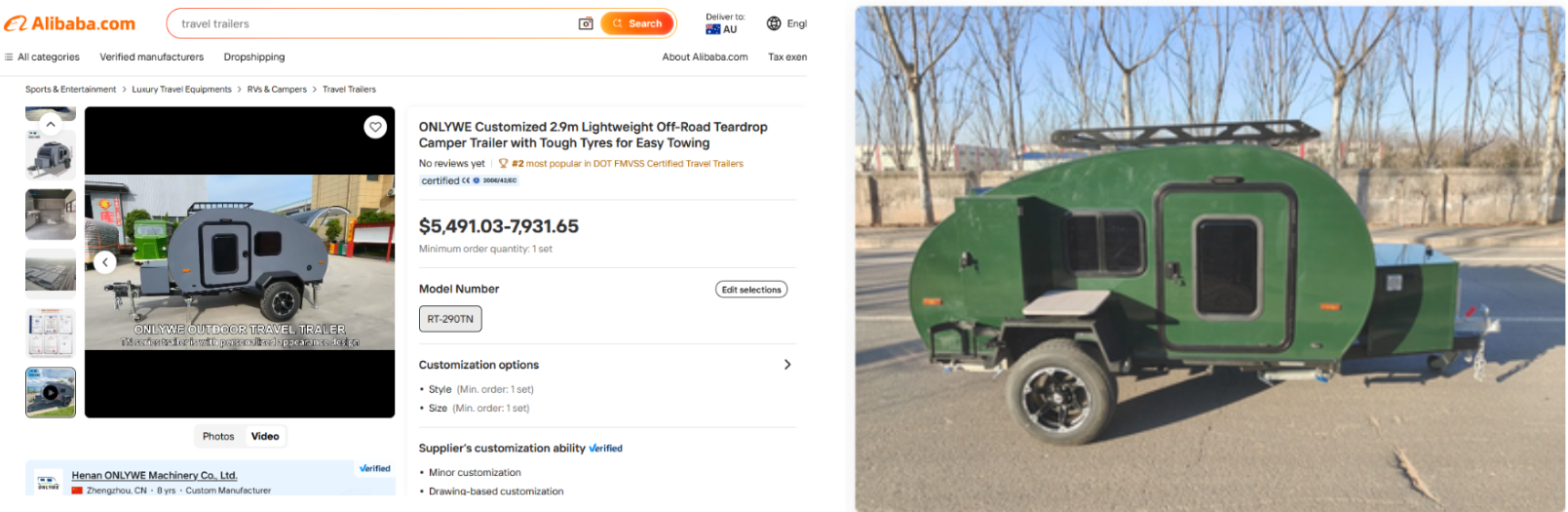
The rear kitchen comparison provides another visible point of similarity. The layout, hatch arrangement and cabinetry appearance closely resemble the Chinese product shown in the supplier material.
That is why the origin question matters. Customers are not only buying a brand name. They are buying a body, chassis, cabinetry, suspension, electrical system and warranty promise.
Evidence 4: Breath has promoted Australian-made claims
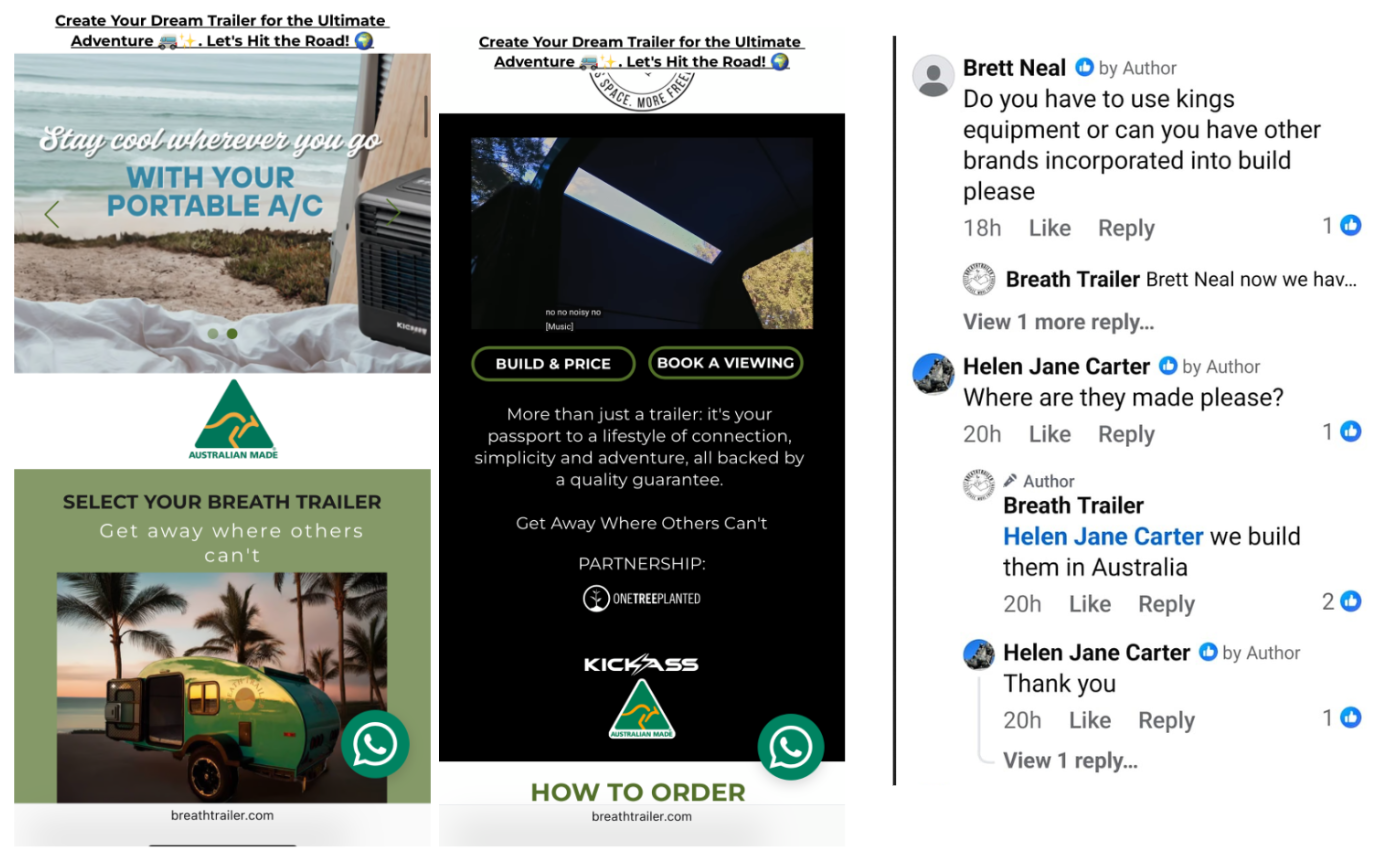
Breath Trailer has publicly described its campers as Australian-made and promoted the idea that they are built from a Sydney factory.
The problem is that those claims sit alongside public product evidence linking the campers to Chinese manufacturing and export listings.
If a camper is imported from China and only minor work is completed locally, calling it Australian-made can give customers the wrong impression. An Australian business, Australian design work or Australian final assembly is not automatically the same thing as an Australian-made product.
In plain English, customers may have been misled about what they were buying.
If Breath Trailer knows that the camper body, cabinetry or major structure is imported and continues to advertise the complete camper as Australian-made, that would be dishonest advertising. Breath should publish a clear explanation of exactly what is made in China, what is made in Australia and what work takes place at the Sydney premises.
Live online magazine claims still describe Breath as Australian-made
These are not old screenshots from an archived website. The following online magazine pages remain live and still contain Australian-made descriptions of Breath Trailer:
- Autoevolution: New Teardrop Camper Star Is Rising in Australia says: “Breath teardrop trailers are custom campers built in Australia” and describes Breath as a “proudly Australian team building each unit on the continent”.
- RV Daily: Introducing Breath Trailer says Breath entered the market with an “Australian-made take” on the teardrop camper. It also states: “Each teardrop is designed, built and assembled in Breath’s Sydney factory, excluding the chassis, which is imported.”
Those claims matter because online magazine articles continue to appear when customers search for Breath Trailer and Australian-made campers. They can reinforce the impression that the complete camper is manufactured in Australia.
The public product comparisons tell a different story. They show a product that appears to match Chinese export models, while live third-party articles continue to describe it as Australian-made.
The question for Breath Trailer is straightforward: if the camper body and major components are imported from China, why are these Australian-made descriptions still live and why do they describe the complete camper as built in Sydney?
Evidence 5: the factory images appear to be AI-generated
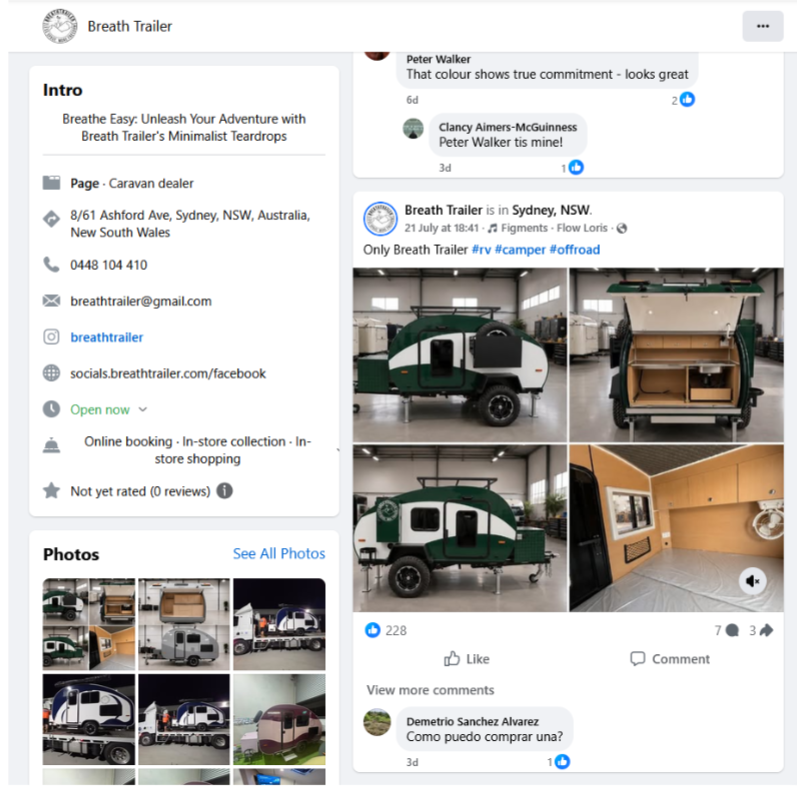
The source article documents factory images published on Breath Trailer social media that appear to contain signs of AI generation.
The concerns include changes in the factory background between images, inconsistent structures and details that do not remain stable from one image to the next. AI image tools often struggle to keep workshop layouts, text, machinery and building features consistent.
That does not prove by itself that no Sydney factory exists. It does mean the images should not be treated as proof of local manufacturing without a physical inspection or a genuine video walkthrough.
A real factory can be shown clearly. A manufacturer making campers in Sydney should be able to show:
- The factory exterior and address
- Completed and partially completed campers
- Chassis and body construction in progress
- Cabinetry and shell manufacturing
- Staff working on real customer campers
- A continuous walkthrough rather than isolated promotional images
Until that evidence is provided, the factory images should be treated as marketing material, not independent proof that the campers are made in Australia.
Australian-made versus Chinese-made: the practical pros and cons
The manufacturing country is only one part of the buying decision. The important thing is that customers know the origin before they compare price and value.
Potential advantages of an Australian-made camper
- Local design and manufacturing decisions can be easier to discuss directly with the builder.
- Factory inspections and build progress may be easier for Australian customers to arrange.
- Warranty conversations and repairs can be handled locally, depending on the manufacturer’s support structure.
- Replacement parts, modifications and service may be easier to coordinate when the builder has direct knowledge of the camper.
- Australian manufacturing can provide stronger traceability for the chassis, body, cabinetry and assembly process.
- A transparent local build story can support resale confidence when the camper’s construction and service history are documented.
Australian-made does not automatically mean perfect. Buyers should still inspect the construction, check the warranty and ask how the manufacturer handles repairs.
Potential advantages of a Chinese-made camper
- Lower manufacturing costs can create a lower purchase price or more included features.
- Chinese factories can produce large volumes of recreational products and may offer established export designs.
- Importing can give Australian buyers access to layouts and products that are not manufactured locally.
- A well-managed importer can provide good local preparation, compliance, parts and after-sales support.
Chinese-made does not automatically mean poor quality. The buyer should assess the actual construction, warranty terms, compliance, parts supply and the stability of the importing business.
The non-negotiable requirement: accurate advertising
The disadvantages begin when the customer cannot tell which of those models they are buying.
An imported Chinese camper can be a legitimate purchase if it is marketed as imported. An Australian-made camper can command a premium if it genuinely meets the relevant origin requirements and the manufacturer can document the production process.
The customer must be able to compare those options honestly. That is why an Australian-made claim attached to a product that appears to match a Chinese export model is serious. It changes the customer’s understanding of the product’s origin, support network and value.
What Breath Trailer should clarify
Breath Trailer should answer these questions in writing:
1. Where is the Breath Max body manufactured? 2. Where are the Essential and Plus bodies manufactured? 3. Are the shells imported as completed structures? 4. Where is the chassis fabricated and galvanised? 5. Where is the cabinetry made? 6. Which components arrive from China? 7. What manufacturing work occurs at the Sydney premises? 8. Can customers inspect the factory while a camper is being structurally built? 9. Is Breath currently licensed by the Australian Made Campaign? 10. Why do the campers closely match Chinese supplier and Alibaba listings? 11. Are the factory images genuine photographs or AI-generated promotional images?
These are reasonable questions for a customer considering a large purchase.
How to check the claim before paying a deposit
Before relying on an Australian-made claim, ask the seller for:
- The country of manufacture for the shell, chassis and cabinetry
- Written details of what work occurs in Australia
- A physical factory inspection
- Photos of a partially built camper, not only completed units
- Warranty repair arrangements and the legal entity responsible
- The exact origin wording that will appear on the invoice and warranty documents
- Evidence of Australian Made Campaign certification, if the logo or certification is claimed
Do not rely on phrases such as “Australian company”, “Australian designed”, “Australian engineered” or “built for Australia” as proof that a camper is manufactured in Australia.
The conclusion
The public evidence points to Breath Trailer campers being made in China and imported into Australia. The matching Chinese supplier products are available for buyers to inspect and purchase directly.
That is not the problem. Importing is legitimate when it is represented honestly.
The problem is advertising an imported product as Australian-made, using Australian factory language and publishing factory imagery that appears to be AI-generated or otherwise unreliable. Those claims can leave customers believing they are buying a locally manufactured camper when the evidence suggests otherwise.
Breath Trailer should provide a clear, documented explanation of its manufacturing process. Until then, buyers should treat the Australian-made claims with caution and inspect the Chinese supplier evidence for themselves.
Read the full source article and evidence Read how JAG Campers are made in Brisbane Book a JAG factory tour
Sources
- JAG source article: Chinese-made teardrops being sold as Australian made
- OnlyWe RT-350TU-style supplier page
- OnlyWe Alibaba RT-350TU listing
- Breath Max product page
- Autoevolution article describing Breath as built in Australia
- RV Daily article describing Breath as Australian-made and built in Sydney
- ACCC country-of-origin guidance
- Australian Made Campaign FAQs

