
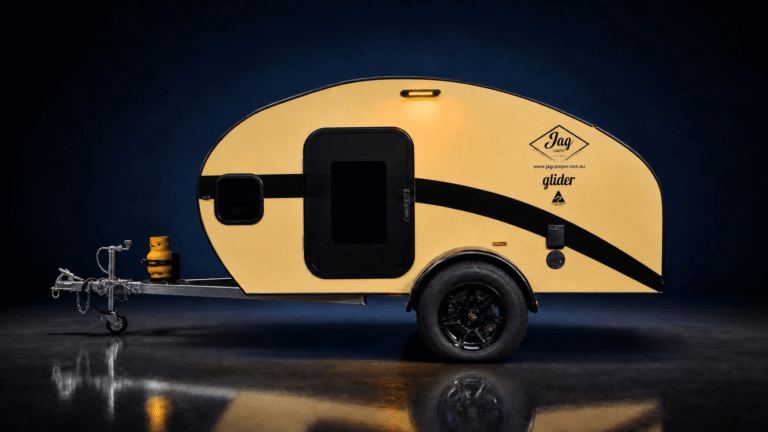
A teardrop camper can be a strong option for solo travellers in Australia, but only if it makes the trip easier rather than adding jobs you have to fight through alone. The right solo camper should be easy to tow, quick to set up, simple to pack, comfortable in bad weather and manageable without needing a second person.
After reading this guide, you should be able to judge whether a teardrop camper suits your solo travel style and know what to test before buying.
Quick answer
For solo travellers, the best teardrop camper is not necessarily the biggest or most feature-packed. It is the one you can confidently hitch, reverse, open, set up, cook from, sleep in and pack away by yourself. Weight, tow ball load, kitchen height, storage access and setup steps matter more than brochure glamour.
Solo camper priorities
| Priority | Why it matters solo | What to test |
|---|---|---|
| Easy towing | You are managing hitching, reversing and parking alone | Check tare, ATM, ball weight and tow vehicle fit |
| Fast setup | Late arrivals and bad weather are harder without help | Open kitchen, awning, bed access and stabilisers yourself |
| Comfortable bed | Recovery matters on long trips | Lie down, sit up, check ventilation and storage access |
| Simple kitchen | Solo cooking should not require unpacking half the camper | Reach fridge, stove, water and bench from one position |
| Security and lighting | Solo travellers often value confidence at camp | Check locks, interior access, lights and phone charging |
| Storage discipline | Too much gear makes solo setup slower | Pack a sample load and see where everything lives |
Worked example: the solo setup test
Before buying, imagine arriving at camp at dusk after a long drive. You are tired, hungry and there is light rain. A good solo camper should still feel manageable.
| Task | Good sign | Warning sign |
|---|---|---|
| Unhitching | You can do it calmly without heavy lifting | You need awkward force or a second person |
| Levelling | Clear process, simple tools, quick result | Too many steps or hard-to-reach points |
| Kitchen access | Food, water and cooking gear are immediately reachable | You must unpack bedding or dig through tubs |
| Bed access | Cabin is ready without converting furniture | Sleeping setup takes too long after arrival |
| Pack-up | Everything has an obvious home | You fight clutter every morning |
If a camper fails this test in a showroom, it will probably annoy you more on the road.
Towing checks for solo travellers
Solo buyers should be conservative with towing. You do not have another person to help manage awkward sites, tight fuel stops or heavy packing decisions. RACQ advises matching the trailer to the vehicle and towbar limits, and Queensland Government guidance recommends using a public weighbridge if you are unsure of loaded mass.
- Check your car’s braked towing capacity.
- Check maximum tow ball download.
- Check the towbar rating plate.
- Check vehicle payload, including your luggage and tow ball weight.
- Check camper tare, ATM, GTM and payload.
- Leave margin rather than buying right at the limit.
What to ask the seller
- Can one person comfortably hitch and unhitch it?
- How many steps are involved in normal setup?
- Can I open and use the kitchen without unpacking bedding?
- Where do wet items, dirty shoes and quick-access gear go?
- What is the loaded tow ball weight likely to be?
- Can I access the cabin and storage in bad weather?
- Can I test the bed, kitchen and setup sequence before ordering?
Common solo-travel mistakes
- Buying too much camper. Bigger can mean more weight, more setup and more cleaning.
- Ignoring night setup. A camper that is fine at midday can be annoying after dark.
- Underestimating kitchen ergonomics. Solo travellers use the kitchen constantly.
- Choosing storage volume over storage access. Easy access beats deep clutter.
- Forgetting rainy days. You need somewhere comfortable to sit, sleep and organise gear.
Solo travel decision guide
| If you mainly want… | Look for… |
|---|---|
| Weekend escapes | Fast hitching, quick kitchen, easy storage |
| Longer touring | Better payload, ventilation, battery/charging, water capacity |
| Remote camping | Clearance, tyres, suspension, recovery points, communication plan |
| Low-stress towing | Low tare, sensible ball weight, compact width and good mirrors |
| Comfort | Proper mattress, insulation, ventilation, lighting and charging |
Solo packing checklist
Solo travellers usually have less tolerance for clutter because every extra item has to be lifted, stored and found by one person. A simple packing system matters as much as storage volume.
- Keep overnight items reachable without unpacking the kitchen.
- Store wet or dirty gear away from bedding.
- Put heavy items low and secure so they cannot move during towing.
- Keep torch, headlamp, phone charger and keys in the same place every trip.
- Use smaller tubs instead of one heavy box you dread moving.
- Leave one empty space for last-minute groceries or wet gear.
Safety and confidence notes for solo touring
A camper cannot replace common-sense travel planning, but it can make solo touring feel more controlled. Good lighting, reliable locks, easy phone charging, quick kitchen access and a bed that is ready without setup all help. So does choosing campsites, arrival times and routes that match your experience level. If you are new to towing alone, start with short trips close to home before heading remote.
Where JAG fits
The JAG Glider is the more solo-friendly starting point in the JAG range because it is lighter and simpler to tow, with JAG listing it at 550kg tare and around 50kg tow ball weight. The JAG Teardrop Camper gives more substantial teardrop comfort for buyers with a suitable tow vehicle. Either way, solo buyers should test the setup sequence and check their own vehicle limits.
FAQ: teardrop campers for solo travellers
Is a teardrop camper too small for solo travel?
Usually no. For one person, a teardrop can feel roomy enough if the bed is comfortable, storage is easy to access and the kitchen works without fuss.
Should solo travellers choose the lightest camper possible?
Not automatically. Light weight helps towing, but the camper still needs enough payload, storage, comfort and weather protection for your trips.
What should I test before buying?
Hitching, opening the kitchen, accessing the bed, packing gear, moving around in the cabin, lighting, ventilation and pack-up. Do the test as if you are tired and alone.

